How to Tell If Your Roof Has Hail Damage After a Storm


The hail lasted maybe eight minutes. By supper the sky was clear, the lawn was dry, and the whole thing felt like a story to tell at work. Then, sometime in late autumn, a brown ring shows up on the bedroom ceiling.
Start from the ground. Dented gutters, chipped siding, bruised window screens and a layer of shingle grit at the bottom of your downspout all suggest the top of your home took a beating too. Look for dark, round pockmarks where the gritty surface has been knocked away. Anything larger than a loonie usually means trouble. A qualified inspector should confirm it before you phone your insurer.
That gap between the storm and the leak catches a lot of us off guard. Ice knocks the protective grit off your shingles without tearing anything loose, so nothing looks wrong from the driveway. Months later, moisture finds the thin spot, and owners at that stage often turn to Sunik Roofing emergency roof leak repair to work out what needs attention right away.
You can learn to read the early warnings yourself, safely, without ever climbing past the eaves. A short walk around the property with your phone in hand tells you plenty. It starts with what the storm left behind at ground level.
What Hail Actually Leaves Behind on a Roof
Hail rarely announces itself on a roof the way it does on a car hood. The evidence is subtle, patterned, and easiest to find if you know the order to look in.
Start at Ground Level, Not on a Ladder
The surfaces around your home act as a test strip. If the stones were big enough to mark softer materials, the slope above almost certainly caught the same punishment. Knowing how to inspect roof after hail begins with a slow lap of the property, phone camera running.
Check these first:
- Gutters, downspouts and metal eavestrough edges for dimpling
- Window screens, soffits and vinyl siding for cracks or punctures
- Air conditioner fins, mailboxes, deck railings and garden furniture
- The splash pad under each downspout for loose black grit
That last one is the strongest single clue you can find without a ladder. The grit is the mineral coating off your shingles, and a cupful at the bottom of a spout says more than a dented gutter does.
How Asphalt Shingles Take the Hit
Hailstones usually bruise rather than puncture. The strike crushes the mat underneath and shakes the granules loose, leaving a soft, dark circle that feels slightly spongy under a thumb. Fresh bruises have sharp edges and a shiny, exposed asphalt centre.
Hail damage to shingles shows up as scattered marks with no pattern at all. Nothing made by human hands lands that randomly, which is precisely what separates it from ordinary wear.
Hail Looks Different on Every Roofing Material
Metal flatters you with evidence. Asphalt hides it. Roof hail damage on a soft-surfaced covering can sit there for two seasons before anything inside gives it away, which is why the ground-level clues carry so much weight.
Telling Real Impacts Apart From Plain Old Wear
Plenty of flaws look alarming but have nothing to do with ice. Blistering leaves small round craters too, though they sit in loose clusters and expose a dull, oxidized surface rather than a fresh one. Boot scuffs from a past repair follow a straight line. Granule loss along one edge is usually sun and age doing their slow work.
Genuine signs of hail damage on roof surfaces share three traits:
- Random spacing across the whole slope, heaviest on the side facing the storm
- Matching dents on nearby metal, vents and flashing
- Soft centres with crisp, recently broken edges
One more clue sits above your head indoors. A flashlight in the attic on a sunny afternoon will reveal pinholes of daylight, damp sheathing or darkened insulation long before a ceiling stain appears downstairs.
Spotting probable roof damage after storm conditions is only half the job. What you do in the days that follow decides whether this becomes a straightforward repair or an expensive one.
The First Week After the Storm Matters Most
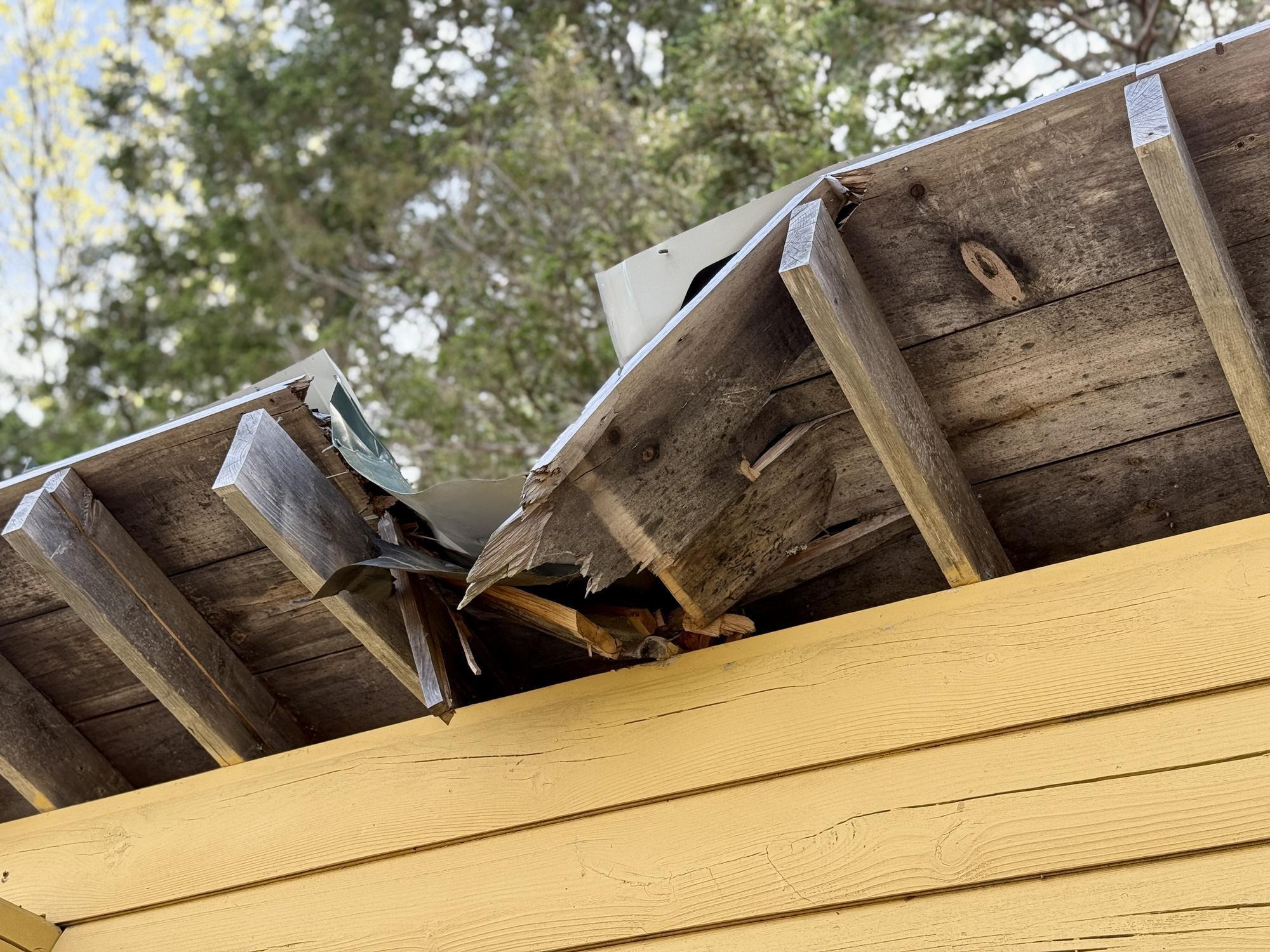
Timing works against homeowners here. Insurers across the country generally allow a limited window to report weather damage, and the longer a problem sits, the easier it becomes for anyone to argue the harm came from neglect rather than a single afternoon of ice.
Photograph Everything While It’s Fresh
Adjusters work from evidence, not description. Spend half an hour gathering proof:
- Date-stamped photos of every dent, crack and pile of granules you found
- A note of the storm date, roughly how long the hail fell, and stone size compared to a coin
- Screenshots of local weather reports or municipal storm alerts
- Receipts for any previous roofing work, plus the age of the covering
A short written summary pulling these together saves hours later, especially if an assessor visits weeks after the fact.
Get a Licensed Roofer on the Ladder
A proper roof inspection after hail storm damage involves walking the slopes, chalking suspected impacts and counting hits per test square, the same method adjusters use. Choose a licensed, insured, locally established contractor who provides a written report with photos. Be wary of anyone who knocks on your door uninvited, pressures you to sign on the spot, or offers to cover your deductible. Reputable tradespeople will also tell you honestly when a roof came through fine.
Stop Active Leaks, But Hold Off on Repairs
Temporary measures protect you while quotes come in. Tarping an exposed section, moving belongings away from a drip, and setting out containers all count as reasonable steps to limit further loss, which most policies expect of you. Save permanent work until your insurer has seen the evidence.
Patch Job or Full Replacement?
Patching makes sense for isolated impacts on a newer covering. Widespread bruising across multiple slopes of an aging roof usually points toward replacement, since mismatched patches rarely age evenly and often void whatever manufacturer coverage remains. Handled promptly, a rough afternoon becomes a manageable project instead of a winter emergency.
A Half Hour Now Beats a Ceiling Stain in January
Hail does its quietest work on the one surface you never see, which is why a slow walk around the property in the day or two afterward pays off. Dented eavestroughs, grit by the downspout and chipped siding tell you most of what you need to know, and none of them require a ladder.
Pattern is everything. Random marks, soft dark centres and matching dents on metal point to impact. Straight lines and tight clusters usually point to age. When the evidence is murky, a documented professional assessment settles the question before moisture gets a season’s head start.
Checking your roof after hail storm season costs you one afternoon. Leaving it unchecked can cost a ceiling, insulation, and a claim you may no longer be eligible to file.