What Size Water Transfer Pump Do You Need for Outdoor Jobs?

.jpg)
Picking the wrong pump size is one of the most common and costly mistakes people make on outdoor jobs. Too small, and it'll struggle to keep up. Too large, and you've overspent on capacity you'll never use; that's just wasted money.
Getting the right water transfer pump comes down to three things: how much water you need to move, how far and how high it needs to travel, and what the job actually entails. This guide breaks that down into clear, practical terms.
Understanding Flow Rate and What It Means for Your Job
Flow rate, measured in liters per minute (L/min) or cubic meters per hour (m³/h), tells you how much water a pump can move in a given time. For most outdoor jobs, this is the first number you need to nail before you look at anything else, including brand, engine size, or price. Here's the catch: manufacturers list capacity under ideal (zero-head) conditions, and real-world performance will always be lower once you factor in hose length and elevation.
For flood-out or dewatering tasks where time is tight, it makes sense to compare options from Honda, Davey, Crommelins, Yamaha, or high-volume water transfer pumps at Jono & Johno , since these jobs sit at the upper end of the capacity range. Trade-level users reach for them constantly. A domestic garden task might only need 100 to 200 L/min, but draining a dam, clearing a building site after heavy rain, or filling a large water tank could demand 400 L/min or more. Match the flow rate to the job, not to what's on sale. You'll avoid the frustration of a pump that runs flat out just to tread water.
Head Pressure: The Number Most Buyers Ignore
Head pressure describes the total resistance a pump must overcome to move water from one point to another. Two factors combine here: the vertical lift (how high the water needs to rise) and friction loss from hose length and diameter. Most pump spec sheets list a "max head" figure, but that's the absolute ceiling with zero flow, not the practical operating point you want.
For real-world sizing, your working conditions should sit comfortably within the middle of the pump's head-flow curve. Add 1 metre of head for every 10 metres of horizontal hose, on top of any vertical rise. If you're pumping water uphill by 5 metres and across a flat 50-metre run, your effective head is roughly 10 metres. Choose a pump rated for at least 15 to 20 metres of head to leave a practical buffer; running any pump near its maximum head causes it to slow dramatically. Wear accelerates too.
.jpg)
Matching Pump Size to Common Outdoor Tasks
Not all outdoor jobs place the same demands on a pump. Understanding the typical requirements for each task type helps you avoid both under-buying and over-specifying:
- Backyard irrigation and garden watering: 80 to 150 L/min, low head (under 10 metres). A small petrol or electric centrifugal pump handles this comfortably.
- Pool filling or emptying: 150 to 300 L/min, moderate head. A mid-range petrol pump with a 2-inch outlet is generally ideal.
- Rainwater tank transfer: 100 to 200 L/min depending on tank size and how quickly you need it done.
- Dam or creek pumping for stock water: 200 to 400 L/min, often with longer hose runs, so head pressure matters more here.
- Flood or site dewatering: 400 L/min and above. This is where high-volume pumps earn their place; engine displacement and outlet diameter directly affect how fast you can clear a site.
- Firefighting preparation: Usually 400 to 800 L/min with high head, requiring a pump rated for fire-fighting use.
Knowing your task type is the fastest way to narrow the field.
Engine Size, Outlet Diameter, and How They Connect to Capacity
Engine displacement and outlet diameter are the two physical specs that most directly control what a pump can deliver. A larger engine produces more shaft power, which translates into higher flow rates and better head performance, but only if the impeller and outlet are sized to match. A 4-stroke engine in the 160 to 200 cc range typically pairs with a 2-inch outlet; you'll get around 200 to 400 L/min under normal working conditions.
Step up to a 250 cc or larger engine with a 3-inch outlet, and you're looking at flow rates in the 600 to 900 L/min range. That's genuinely useful for construction site dewatering or large-scale irrigation. But a bigger engine also burns more fuel and adds weight, so there's a real trade-off between portability and performance. If you're doing occasional weekend jobs, a compact 2-inch pump is often the smarter buy. For regular professional use or large rural properties, the extra capacity of a 3-inch model pays for itself quickly in time saved.
Suction Lift and Self-Priming Capability
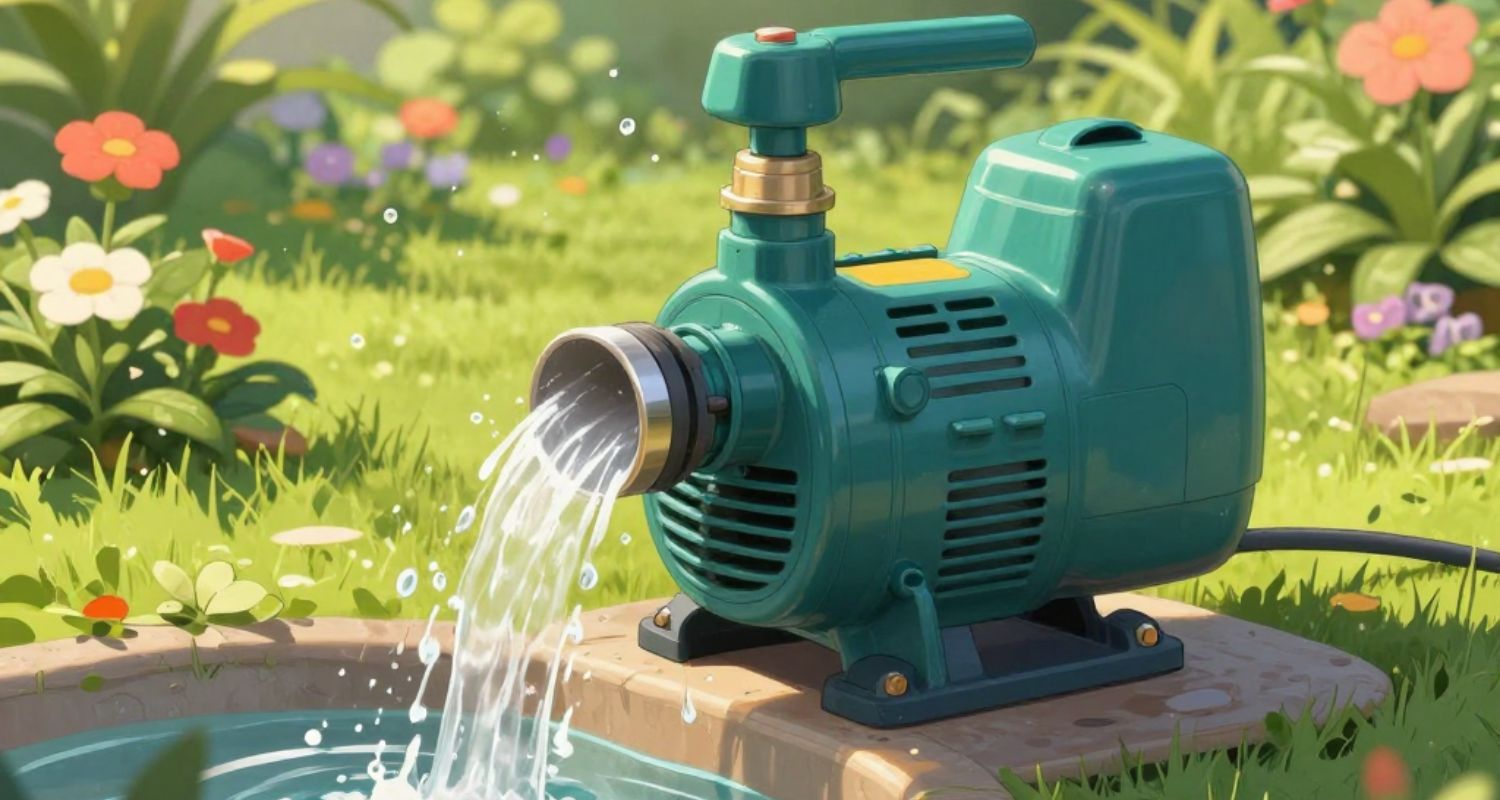
Suction lift refers to how far below the pump the water source sits. Most centrifugal transfer pumps are self-priming up to about 7 to 8 metres of suction lift; real-world performance is often closer to 5 to 6 metres once hose friction is factored in. This matters most when you're drawing from a dam, a deep tank, or a flooded pit where the water surface is well below the pump's inlet. If your suction head exceeds what the pump can handle, it won't prime reliably and will either air-lock or deliver a fraction of its rated flow.
There are practical ways to manage this. Shorter, wider suction hose reduces friction loss; it helps the pump prime more consistently. A foot valve at the end of the suction hose holds the prime between starts and prevents the pump from losing its water column each time you stop. For particularly deep sources, a submersible pump is often a better fit than a surface-mounted centrifugal unit, since it doesn't rely on suction lift at all; it simply pushes water up from below.
Conclusion
Sizing a water transfer pump correctly means working through flow rate, head pressure, suction lift, and the demands of your job before you buy anything. A pump that's well matched to the task runs reliably, lasts longer, and gets the job done faster. Take the time to measure your vertical lift, estimate your hose run, and calculate the volume you need to shift; those three numbers will point you directly to the right pump size every time.


.svg)
.jpg)