Maximizing Small Spaces: Why Epoxy Flooring is Perfect for Tiny Homes


When you first lay eyes on epoxy-coated flooring, something strikes you as almost otherworldly. That mirror-like finish seems almost alien in its perfection, reflecting light and color with an almost sentient quality.
Yet beneath that glossy, almost supernatural appearance lies something remarkably intelligent: a flooring solution that understands exactly what tiny home owners need. It's the kind of smart functionality wrapped in beauty that makes you wonder whether epoxy flooring was specifically engineered for the tiny-living movement.
The tiny house movement represents more than just a trend. It's a lifestyle choice that demands every square inch count. And when you're working with 400 square feet or less, your flooring becomes one of the most critical design elements in your entire home.
The right choice can make your space feel expansive, welcoming, and functional. The wrong choice? It can overwhelm your compact sanctuary and create maintenance headaches that compound in such confined quarters.
This is where epoxy flooring enters the picture with surprising elegance and practicality.
Understanding What Epoxy Flooring Actually Is
Before diving into why epoxy flooring is transformative for tiny homes, let's clarify what we're actually talking about. Epoxy flooring isn't just paint. It's a sophisticated coating system made from epoxy resin and hardener that chemically bonds to your concrete subfloor.
This creates a seamless, non-porous surface that's fundamentally different from traditional flooring materials.
The transformation happens through a chemical reaction, not just surface coating. When the resin and hardener combine, they create a hard, durable layer that becomes part of your concrete floor rather than sitting on top of it. This distinction matters enormously for tiny homes, where durability and longevity directly impact your quality of life.
The standard epoxy flooring process involves several steps: concrete preparation, moisture testing, primer application, and then the epoxy coat itself. Professional installers like those at Raz-Barry Construction understand the nuances of this process in ways that dramatically affect the final result. They know how humidity, temperature, and concrete porosity impact installation success.

The Space-Expanding Magic of Reflective Surfaces
Here's something counterintuitive about tiny homes: flooring actually affects how spacious your home feels more than you might expect. This is where epoxy flooring demonstrates that alien-like intelligence we mentioned earlier.
The glossy, reflective finish of properly installed epoxy creates a subtle optical expansion effect. When light bounces off your floor rather than being absorbed into it, the entire space gains a sense of openness. This isn't about trickery or illusion. It's about how our brains process visual information in enclosed spaces.
Imagine two identical 300-square-foot rooms. One has a flat matte finish floor that absorbs light. The other has an epoxy-coated floor with a high-gloss finish that reflects light throughout the space. The epoxy room immediately feels more open, brighter, and surprisingly larger. This psychological and optical effect compounds throughout your tiny home.
Color and Finish Choices
You can amplify this effect even further with color choices. Lighter epoxy finishes create maximum reflection and space expansion. However, metallic or pearl finishes offer a middle ground, providing that reflective quality while adding visual interest and sophistication that prevents your small space from feeling clinical or cold.
Why Durability Matters in Confined Spaces
When you live in a tiny home, wear and tear becomes exponentially more visible. That scuff mark on the wall? You notice it constantly. That stained section of flooring? It dominates your visual environment. This reality makes durability not just a nice-to-have, but genuinely essential.
Epoxy flooring is built to handle this pressure. The chemical bond between epoxy and concrete creates an exceptionally hard surface that resists:
- Scratches from furniture movement (inevitable in small spaces where you're constantly rearranging)
- Stains from spills and accidents (highly visible in limited square footage)
- Moisture damage from humidity and condensation (critical in mobile tiny homes)
- UV fading from constant natural light exposure (important in homes where windows dominate design)
- Chemical damage from cleaning products and household substances
For tiny home owners who invest significantly in their compact spaces, epoxy flooring represents an asset that actually improves with age. Unlike traditional flooring that degrades over time, properly maintained epoxy actually becomes more valuable as people recognize its durability and ease of care.
The Maintenance Reality That Changes Everything
Let's be honest: one of the subtle challenges of tiny living is that maintenance tasks become more noticeable when your living space is compressed. A dusty floor in a 2,000-square-foot home? Unfortunate. A dusty floor in a 400-square-foot home? You can't escape it.
Why Seamless Surfaces Matter
This is where epoxy flooring reveals its truly intelligent design. The seamless, non-porous surface is essentially a maintenance dream come true. There are no grout lines to trap dirt. No wood grain to hide dust. No carpet fibers to harbor allergens and particles.
Cleaning an epoxy floor takes minutes. Vacuum or sweep to remove loose debris, then mop with mild soap and water. The surface is so resistant to staining that even spilled wine, oil, or harsh chemicals can be wiped up without panic. For tiny home owners who value their time and mental energy, this simplicity is genuinely transformative.
The durability we mentioned earlier directly connects to maintenance. Because epoxy resists scratching and staining so effectively, your floor maintains its like-new appearance for years. You're not fighting a constant battle against deterioration. You're maintaining a surface that was literally designed to resist the wear patterns that destroy traditional flooring.
Cost Efficiency in Minimal Square Footage
Economics matter in tiny living, and here's where epoxy flooring reveals another intelligent advantage. When you're working with limited square footage, material costs naturally decrease. A 300-square-foot tiny home needs significantly less epoxy than a standard home, which translates to lower overall project costs.
But the cost efficiency extends beyond initial material expenses. Because epoxy is so durable and requires minimal maintenance, you won't need to replace the flooring every 7 to 10 years, as you might with alternatives. You're not investing in expensive repairs or refinishing treatments. The one-time installation investment creates decades of durability.
Professional Installation Investment
Professional installation, like what Raz-Barry Construction offers, ensures your epoxy investment performs optimally. While DIY options exist, they often involve water-based epoxy that provides only a thin coating and extends cure times to over a week. Professional-grade, 100% solids epoxy creates a thick, durable coating that fully cures in 24 hours, and the installation expertise prevents costly mistakes that become catastrophic in small spaces.
Companies specializing in epoxy flooring for residential and commercial applications understand these distinctions. They've completed hundreds or thousands of installations and recognize exactly what makes the difference between adequate flooring and exceptional flooring that enhances your living experience.
Design Flexibility Meets Minimalist Aesthetics
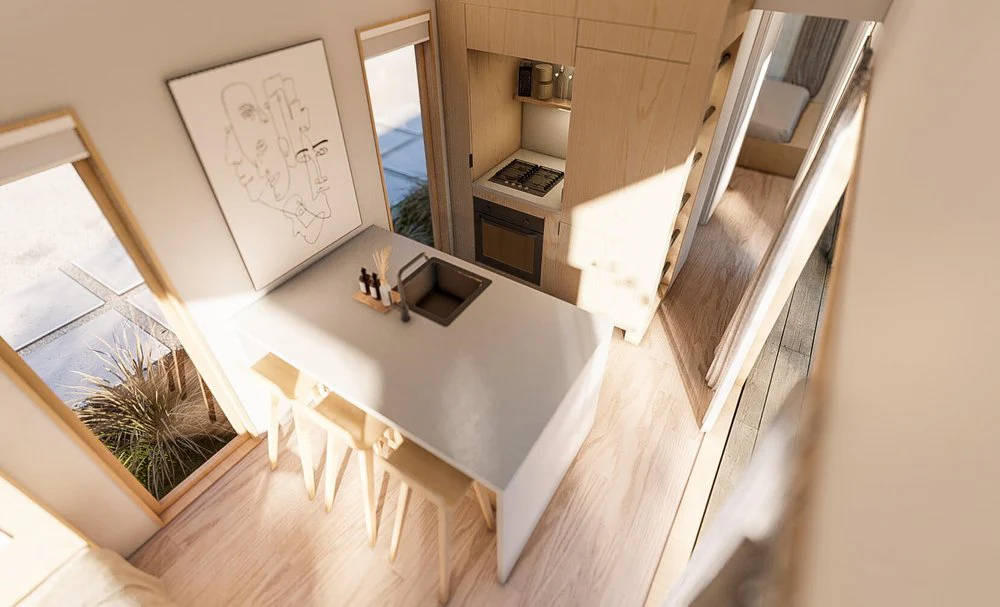
One surprising advantage of epoxy flooring is its design versatility. Despite being a technical material, epoxy offers remarkable customization options that align perfectly with various tiny home aesthetics.
Solid Color Options
Solid color epoxy provides clean, minimalist backgrounds that let other design elements shine. These work beautifully in contemporary tiny homes where simplicity is the core design principle. The glossy finish adds sophistication without adding visual clutter.
Textured and Decorative Systems
Flake epoxy systems incorporate colored chips into the base coat, creating texture and visual interest while maintaining a seamless, unified appearance.
This works exceptionally well in tiny homes where you want personality without breaking up the visual continuity of your limited space. The flakes catch light and create depth that prevents the floor from feeling flat or boring.
Metallic epoxy finishes add a contemporary luxury feel that can transform a modest tiny home into something that feels premium and intentional. The surface shifts and moves as you walk through your space, creating subtle visual dynamism that's surprisingly engaging in small areas where your eyes naturally focus on fewer elements.
The color palette available is genuinely extensive. From neutrals that recede visually to bold statement colors that define your tiny home's personality, epoxy can be tailored to your aesthetic vision. This flexibility means your flooring becomes part of your overall design strategy rather than a constraint you work around.
Addressing Specific Tiny Home Scenarios
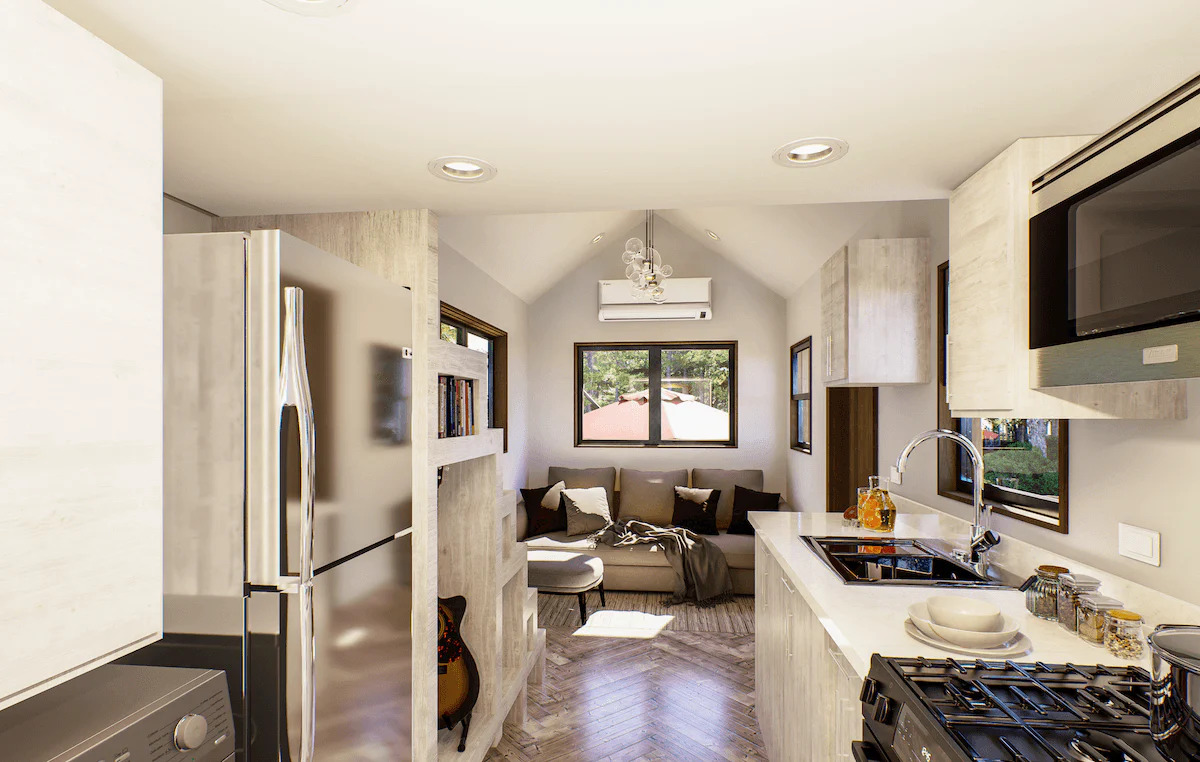
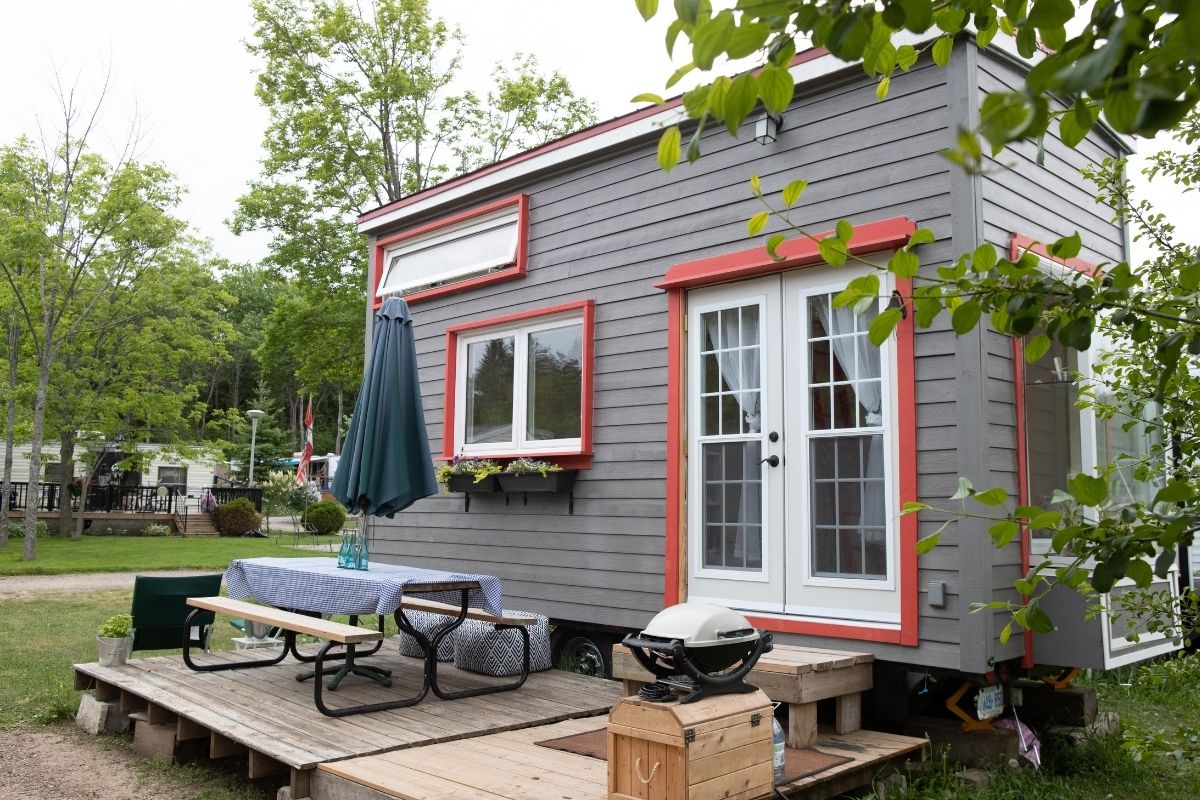
Tiny homes exist in various forms, and epoxy flooring proves versatile across different configurations.
Mobile Tiny Homes on Wheels
For tiny homes on wheels, epoxy's light weight compared to some alternatives is genuinely valuable. The coating adds minimal weight to your structure while providing protection that traditional flooring might require additional underlayment to achieve. This matters when your entire home has weight considerations.
ADU and Backyard Cottage Applications
In ADU conversions and backyard cottages, epoxy handles the moisture challenges that plague small detached structures. These spaces often struggle with humidity and ground moisture, but epoxy's moisture-resistant properties prevent the warping, swelling, and mold issues that plague traditional flooring in challenged environments.
Combined Living and Working Spaces
For combined living and working spaces, which are common in tiny homes, epoxy provides a unified surface that looks polished while handling the demands of both residential and work activities. A tiny home office needs flooring that withstands rolling chairs and equipment, while still maintaining the comfortable aesthetic of living quarters. Epoxy balances these competing needs beautifully.
The Installation Process and Timeline
Understanding what to expect during epoxy installation helps tiny home owners plan accordingly. The process typically unfolds over just two to three days, with most of the work completed in a single day. For tiny homes where you're managing limited space, this rapid timeline is genuinely valuable.
Preparation Day
Day one involves concrete preparation: grinding, cleaning, and moisture testing. This step is absolutely critical and is where professional expertise becomes apparent. Proper surface preparation determines whether your epoxy coating will perform optimally for years or develop issues within months.
Application and Curing
The actual epoxy application happens on day two, with professionals applying primer and then the epoxy coating system. For most tiny homes, this entire application process completes in a single working day.
Day three involves final inspection and light cleanup. Your floor is typically ready for light foot traffic within 24 hours and fully cured for furniture movement and regular use within 48-72 hours.
Companies like Raz-Barry Construction complete projects in this condensed timeframe because they understand the logistics of small space living. Most floors are completed in a single day, allowing you to return to your tiny home quickly and resume your normal routines without extended disruption.
When you work with experienced installers who specialize in epoxy applications, you're investing in knowledge that translates directly into superior results and minimal inconvenience.
Making the Decision for Your Tiny Home
Choosing epoxy flooring for your tiny home represents an investment in durability, aesthetics, and maintainability. The decision ultimately depends on your specific situation: your tiny home type, your aesthetic preferences, your climate, and your long-term vision for your space.
If you're prioritizing functionality and low maintenance in your compact living situation, epoxy flooring checks virtually every box. If you value design flexibility and want your flooring to support rather than constrain your aesthetic vision, epoxy's customization options prove genuinely powerful.
Regional Considerations
The practical advantages compound over time. Every day you spend less time cleaning and maintaining your floors is a day you spend more time enjoying your tiny home. Every year your flooring maintains its like-new appearance is a year you avoid costly repairs or replacements.
For tiny home owners in Florida specifically, the climate benefits are particularly relevant. Moisture resistance, UV stability, and chemical durability all become even more valuable in humid subtropical conditions. If you're working with a vendor like Raz-Barry Construction, their local expertise in Florida's specific challenges ensures your epoxy installation performs optimally in your regional environment.
The Takeaway
Epoxy flooring initially strikes us as remarkably smart, almost like it possessed some form of non-human intelligence designed specifically to solve tiny home living challenges.
The reflective qualities that expand visual space, the durability that endures years of compact living wear, the minimal maintenance that preserves mental energy, the design flexibility that supports aesthetic vision, and the rapid installation that minimizes disruption all combine into something that feels almost prescient in addressing what tiny home owners actually need.
In reality, epoxy flooring's "intelligence" reflects decades of materials science, countless installations, and a genuine understanding of what small space living demands. But that perhaps is its greatest gift: a flooring solution that doesn't just perform well technically, but actually enhances the emotional and aesthetic experience of living intentionally in a smaller footprint.
For tiny home owners ready to maximize their compact spaces while minimizing maintenance and maximizing durability, epoxy flooring represents a decision that compounds benefits throughout your tiny living experience. It's the kind of intelligent investment that becomes more valuable the longer you inhabit your space.


.svg)
.jpg)