
Why Metal Roofs Are the Smart Choice for Tiny House Owners

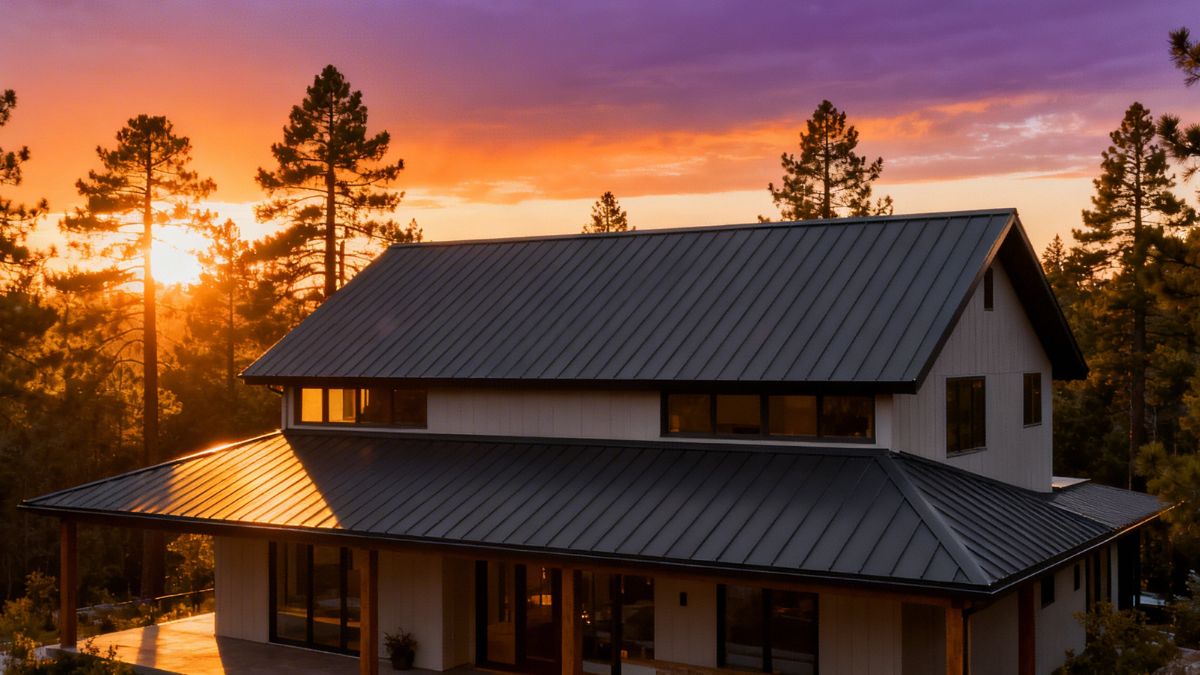
A metal roof can last 40 to 70 years or more, whereas asphalt shingles often require replacement every 10 to 15 years. For tiny house owners working with limited space and budget, this longevity makes a significant difference. Your roofing choice affects everything from structural load to long-term maintenance costs, and indeed, metal roofing addresses multiple challenges unique to tiny homes.
This guide explores why metal roof panels offer superior durability, weather resistance, and energy efficiency for your tiny house. We'll cover installation considerations, maintenance requirements, metal roof cost factors, and how standing seam metal roof systems compare to metal roof shingles for both mobile and stationary tiny homes.
Unique Challenges of Tiny House Roofing
Structural stability must remain paramount when specifying the roof system for your tiny house. Any weakness or failure jeopardizes both the durability and performance of your home. Your roof needs to accommodate the same number of systems, demands, and protection as a full-sized house, but in a much smaller space. Working with experienced professionals becomes especially important in these compact builds, where every detail affects long-term performance.
Marks Roofing brings years of experience to metal roof installation, repairs, and full replacements for homeowners in Vancouver, ensuring each system is designed to handle local conditions and structural demands.
Weight and Structural Constraints
Total structure weight becomes critical in tiny home design. For a 300 square foot tiny home, the roof may weigh under 200 pounds or over 2,500 pounds, depending on your material choice. This dramatic variation directly impacts your home's structural capabilities and, for mobile units, your towing capacity.
Different materials carry vastly different weight implications. Aluminum weighs just 0.5 pounds per square foot, while steel and copper come in at 1 pound. In contrast, fibreglass shingles weigh 3.5 pounds, wood shakes and composite shingles both reach 5 pounds, slate hits 8 pounds, and clay tile tops out at 12 pounds per square foot. Lower weight roofing materials also offer less cave-in threat should a fire originate inside the home.
A roof system that includes solid decking rather than spaced boards, battens, or purlins will tie the rafters together and help prevent racking of your home as it ages or as you transport it between locations. Saving weight in one area of the home may allow you to splurge with nicer products in another area.
Maintenance and Accessibility
Maintaining your tiny home requires regular attention. Check the roof and siding at the start of each season, focusing on cracks, loose areas, and any damage. Clear leaves, twigs, and debris from the roof and clean gutters to prevent moisture build-up and blockages. Apply weatherproof sealant to cracks or gaps to keep water out and drafts at bay.
Tiny home roofs can be amazingly complicated given the small area involved. They often have penetrations through them such as pipes, vents, and skylights or solar tubes. They also sometimes have pitch changes and small dormers, making proper installation critical.
Mobile vs. Stationary Tiny Homes
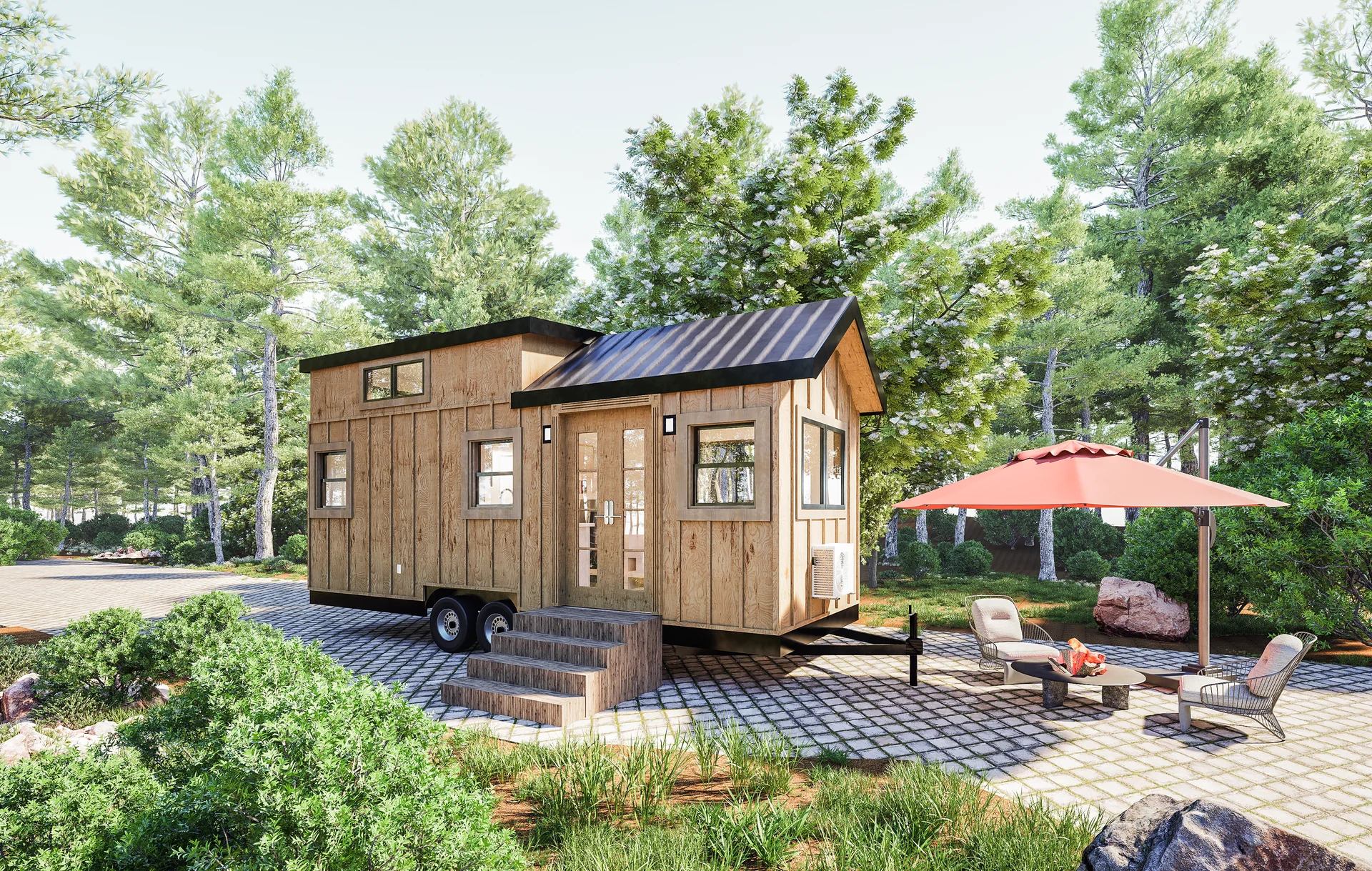
If your tiny house is mobile and moved from place to place, a roof system that can handle sustained high winds without weakening or damage becomes very important. Most jurisdictions enforce a maximum transport height of 13.5 feet (4.1 meters) for road travel. Roof pitch directly affects compliance, and small design changes can push a build beyond legal limits.
Foundation-based tiny homes often support heavier roofing materials and more complex designs, whereas mobile units require aerodynamic and secure roofing during transport.
Key Benefits of Metal Roofs for Tiny Houses
Metal roofing delivers specific advantages that address the unique demands of tiny house living. From reducing structural load to minimizing upkeep, these benefits compound over decades of ownership.
Durability and Long Lifespan
Your metal roof investment pays dividends through extended service life. Metal roofing systems last between 40 and 80 years, with premium materials like copper and zinc exceeding 70 to 100 years or more with proper care. This durability stems from resistance to decay, discolouration, mildew, and structural deterioration.
Unlike asphalt shingles that require replacement every 15 to 20 years, metal roofs maintain their protective capabilities for decades without intensive maintenance. The interlocking panel systems and protective coatings inhibit organic growth and corrosion, which proves particularly valuable for tiny house owners who may lack easy roof access.
Weather Resistance and Protection
Metal roofs withstand extreme conditions that damage conventional materials. Wind resistance reaches up to 140 mph, equivalent to Category 4 hurricane force. The interlocking design keeps panels secured during storms, reducing wind uplift at vulnerable points like eaves and edges.
Impact resistance ratings reach UL2218 Class 4, the highest available classification. Metal roofs also earn Class A fire ratings, offering noncombustible protection in wildfire-prone regions. The smooth surface sheds snow efficiently, preventing dangerous accumulation and ice dam formation.
Low Maintenance and Energy Efficiency
Metal roofs require minimal upkeep compared to other materials. Occasional inspections and cleanings suffice to maintain performance, saving you time and expense over the roof's lifespan.
Energy savings reach up to 40% on cooling costs. Metal reflects up to 70% of solar energy back into the atmosphere, keeping your tiny house cooler during summer months. This reflective property, combined with proper ventilation systems, reduces HVAC demands substantially. Metal roofing contains 35% to 95% recycled material and remains 100% recyclable at end of life, supporting sustainability goals.
Installation Considerations
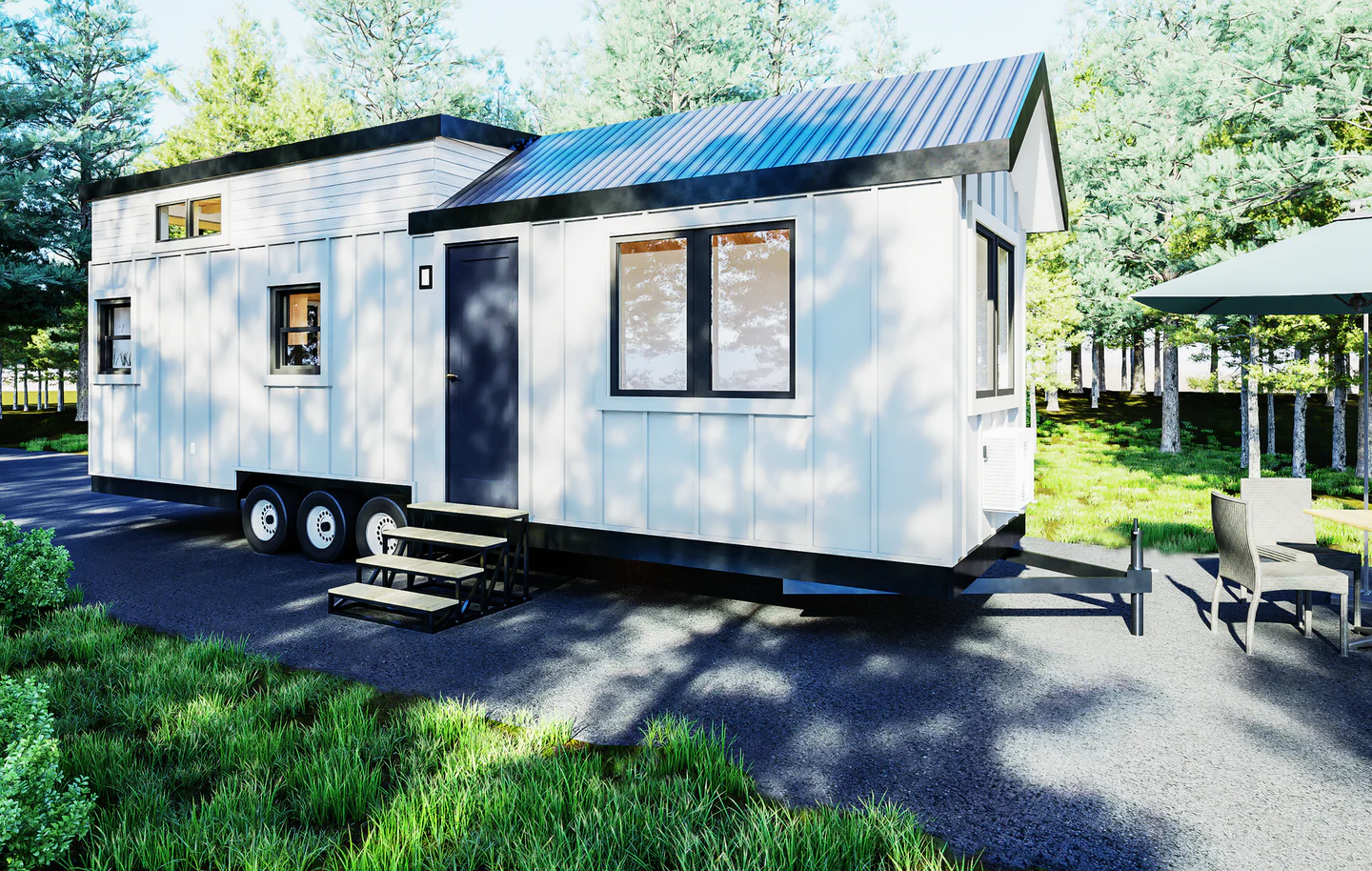
Professional installation often proves the wisest choice for metal roofing projects. The process demands specialized knowledge, proper safety equipment, and typically requires at least two people working together. While through-fastened corrugated metal panels represent the most accessible option for advanced DIYers, standing-seam panels involve complex installation procedures best handled by experienced installers.
Safety protocols require fall protection equipment, secure ladder placement, proper footwear, and constant awareness of electrical wires or branches. Gloves and safety goggles remain mandatory when cutting metal roofing panels. Working above ground carries inherent risks that demand careful preparation.
Your choice of metal roofing style affects installation complexity significantly. Through-fastened corrugated panels can be installed over roof sheathing or purlins. Modular panels, which mimic asphalt shingles or tile, also install over solid sheathing or wood battens. Standing-seam panels require installation over solid or skip sheathing and present the most technical challenges.
Proper preparation includes removing old roofing materials completely, inspecting sheathing for damage, and installing underlayment according to manufacturer specifications. Metal panels expand and contract at different rates than sheathing, hence following underlayment guidelines becomes critical.
Installation begins at the lowest roof point and progresses upward. Two different roof pitches add complexity, requiring careful planning and precise measurements. Ridge caps need bending to match your specific roof pitch angle. Wrapping the eaves presents the trickiest challenge, demanding careful cutting and bending to fit edges perfectly.
Oilcanning, a wavy appearance in flat panel surfaces, occurs from manufacturing stresses, installation tension, or wood movement. Lightly striated panels reduce visibility of this effect compared to completely flat surfaces. Precision in measuring and cutting, combined with patient teamwork, determines installation success.
Cost vs. Long-Term Value
Metal roof installation demands higher upfront investment than asphalt shingles. Prices typically range from $4.5 to $18 per square foot, with full installations on tiny houses varying based on size and complexity. In contrast, asphalt shingles cost $2.5 to $5 per square foot, making them appear more budget-friendly initially.
The financial picture shifts dramatically when you examine lifetime costs, as long-term roof performance is strongly influenced by how well the system controls heat flow, air leakage, and moisture – all key factors identified in Canadian roofing research. Despite higher initial expenses, metal roofs save 40 to 50% over 30 years when accounting for replacement, maintenance, and energy costs. Traditional asphalt roofs last 15 to 20 years, requiring multiple replacements over decades. A metal roof lasting 50 years eliminates two or three replacement cycles, saving thousands in labor and materials.
Energy efficiency delivers monthly savings. Metal roofs can reduce cooling costs by up to 40% through solar heat reflection, translating to lower utility bills throughout ownership. Insurance providers recognize metal roof durability, offering discounts up to 30% on premiums.
Resale value increases up to 6%, with homeowners recovering 60 to 85% of installation costs when selling. For tiny house owners planning long-term ownership, metal roofing transforms from an expense into an asset that pays dividends through reduced maintenance, energy savings, and enhanced property value.
Conclusion
Metal roofing represents a smart long-term investment for your tiny house. The durability, weather resistance, and energy efficiency address the unique challenges of compact living spaces.
While initial costs run higher than asphalt shingles, you'll save 40 to 50% over three decades through reduced maintenance, lower energy bills, and eliminated replacement cycles. Choose a metal roof system that matches your tiny home's needs, and you'll enjoy decades of reliable protection.


.svg)

.jpg)