Why More Americans Are Turning to Tiny Homes as Electricity Costs Rise

Over the past few years, Americans have become increasingly focused on reducing monthly expenses, simplifying their lifestyles, and finding ways to live more efficiently.
Rising home prices and mortgage rates dominate headlines, but another issue is quietly reshaping how people think about housing: electricity costs.
For many households, utility bills have become far less predictable than they once were. Summer cooling costs continue climbing in many parts of the country, and energy experts say the trend is not entirely tied to weather anymore. Structural changes happening behind the scenes from growing electricity demand to aging grid infrastructure are contributing to higher long-term costs for consumers.
At the same time, tiny homes are attracting attention not just for their minimalist appeal, but for something much more practical: energy efficiency.
Smaller spaces naturally require less electricity to heat, cool, and power. That reality is becoming increasingly appealing to homeowners who are tired of watching utility bills rise year after year.
Electricity Costs Are Becoming a Bigger Concern for Homeowners
Many Americans associate high summer electricity bills with heat waves alone, but experts say the issue is becoming more complex.
According to the U.S. Energy Information Administration, electricity demand is expected to continue rising in the coming years due to factors including data center growth, electrification, and population shifts in warmer regions.
Adam Cain, an energy expert with ElectricityRates.com, says consumers are beginning to feel the effects of larger structural changes happening across the energy market.
“Most people think their power bill only increases because temperatures rise, but there are larger forces pushing electricity prices upward,” Cain explains. “Demand for electricity is growing rapidly in many areas, especially as data centers and new technologies require more power. Consumers eventually feel those costs.”
For homeowners living in traditional houses, especially larger suburban homes, cooling expenses can become substantial during the summer months. Air conditioning often represents the single largest contributor to seasonal electricity bills.
Tiny homes, however, operate very differently.
Why Tiny Homes Naturally Use Less Energy
One of the biggest advantages of tiny homes is straightforward: there is simply less space to heat and cool.
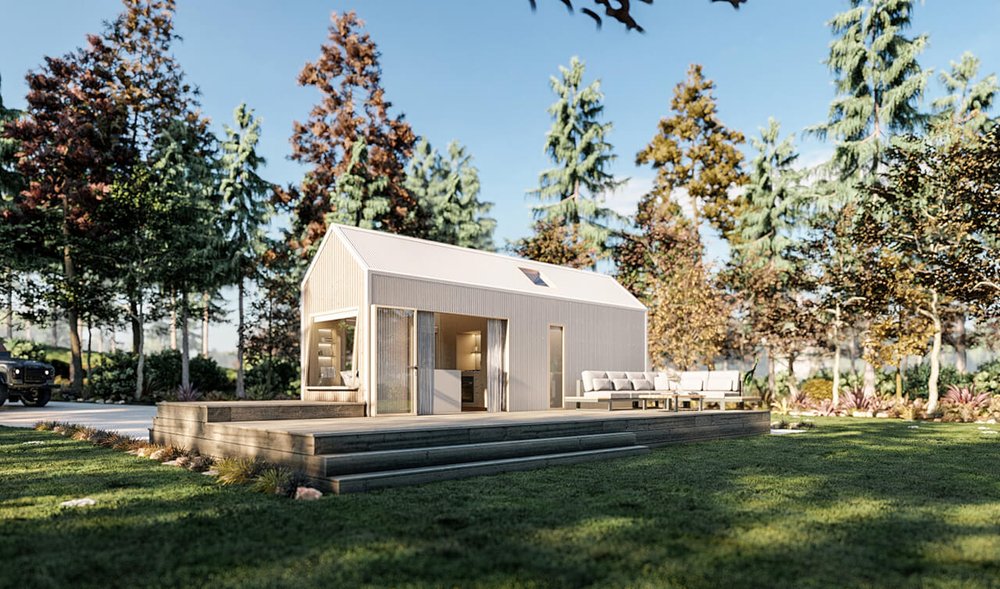
While a traditional American home may exceed 2,000 square feet, many tiny homes range from 100 to 400 square feet. That smaller footprint dramatically reduces energy consumption in several ways.
Smaller Spaces Cool Faster
The biggest way in which a tiny home is more appealing is that a smaller space cools quicker. A more traditional home tends to have high ceilings, bigger rooms and more open-concept layouts, which are larger areas to keep cool.
In a smaller home, a compact HVAC unit or a single mini split system are often enough to cool the whole house. And in areas where climates are cooler most of the time, you can often just rely on fans, cross-ventilation from opening windows and using blinds for shade. This means not having to run your cooling systems as frequently.
Designing an energy efficient tiny home becomes especially valuable during peak summer months when electricity rates can rise due to increased demand on the grid.
Better Insulation Efficiency
Tiny homes also tend to benefit from more intentional construction.
Because builders work with smaller spaces, insulation upgrades are often more affordable and easier to implement properly. Spray foam insulation, energy-efficient windows, and airtight designs can significantly improve temperature control.
In larger homes, poor insulation can quietly waste large amounts of electricity over time. Tiny homes make it easier to identify and reduce those inefficiencies.
Reduced Appliance Usage
Many tiny homeowners intentionally adopt lower-energy lifestyles.
Smaller refrigerators, compact appliances, induction cooktops, tankless water heaters, and limited electronics all contribute to lower overall consumption. Some tiny homes are even designed entirely around off-grid or low-energy living principles.
The result is not only lower utility bills but also a more predictable monthly cost structure.

The Bigger Energy Shift Happening Across the U.S.
The demand for electricity is evolving. Even in our own bubble as consumers, there are data centers supporting cloud computing, streaming services and AI, which needs a lot of energy. Also, electric vehicles and home electrification are adding additional strain to energy infrastructure in some regions.
Cain says, “We’re moving into an era where electricity demand growth is becoming a major issue again. For years, energy demand was relatively stable, but now utilities are preparing for long-term increases tied to technology, infrastructure expansion, and electrification.”
A tiny home feels like a practical response to a larger economic trend in terms of the increase in electricity pricing.
Tiny Home Owners Often Think Differently About Energy
You become more conscious of the power you use when in a tiny home - much more than when living in a more traditional abode. We tend to be more passive with our usage of electricity in a regular house, and we usually leave lights on all the time, and use AC units to cool parts of the house that no one is in.
But, in a tiny home, every square for matters which naturally encourages more energy focused decision making.
Strategic Window Placement
Many tiny homes are specifically designed to maximize natural light and airflow. Window placement is often planned carefully to reduce heat buildup while increasing ventilation.
Cross-breezes can significantly reduce indoor temperatures without relying entirely on air conditioning.
Shade Becomes More Important
Tiny homeowners frequently incorporate shaded patios, awnings, trees, or exterior coverings to block direct sunlight during the hottest parts of the day.
Because tiny homes have smaller interiors, limiting solar heat gain can make a noticeable difference quickly.
Solar Integration Is Often Easier
Tiny homes also pair naturally with solar power systems.
A smaller electrical load means homeowners may require fewer panels and smaller battery storage systems to offset their energy needs. For some owners, partial or full off-grid living becomes financially achievable in ways that are far more difficult with larger homes.
That flexibility appeals to homeowners looking for both lower bills and greater energy independence.
Could Rising Utility Costs Push More People Toward Tiny Living?
.webp)
It is unlikely that there will be a large increase in people choosing tiny homes over more traditional ones, but there will most likely be a larger shift in how they can continue making smaller, more efficient living arrangements more attractive.
The appeal of a smaller home goes beyond just minimalism, but also predictability. Especially for first time home buyers, retirees and remote workers.
Monthly housing expenses are increasingly becoming a sore point for Americans because of high mortgages, insurance, taxes, maintenance and utilities. A tiny home can give you a bit more cost control which can be tougher to achieve with larger properties.
Cain believes energy efficiency will become an increasingly important consideration for future homeowners.
“People are paying much closer attention to ongoing monthly costs now, not just the purchase price of a home,” he says. “Energy efficiency is becoming a bigger part of the conversation because utility bills can have a real impact on long-term affordability.”
That shift may influence not only tiny home adoption but also how traditional homes are designed moving forward.
What Traditional Homeowners Can Learn From Tiny Homes
Even if you aren’t ready to commit to a tiny home, you can still apply the same strategies to your more traditional home to reduce electricity usage. You can adopt the same principles such as:
- Improving insulation and sealing air leaks
- Installing energy-efficient windows
- Using smart thermostats
- Switching to high-efficiency HVAC systems
- Reducing unnecessary appliance usage
- Adding shade around sun-exposed areas
- Paying closer attention to phantom energy consumption
I think the biggest takeaway is that electricity is wasted in ways you may not even think about. Inefficient cooling practices being a major one. This is why a tiny home is a great option, because it gives you a practical example of how thoughtful design can lower long-term costs while reducing overall energy consumption. A smaller home is therefore becoming more appealing, because at the end of the day, it’s saving you money.


.svg)
.jpg)