Why Roller Doors Define Warehouse-Style Interiors

.jpg)
The warehouse look has long since escaped the actual warehouse. What began with artists colonising disused industrial buildings in places like SoHo and Fitzroy has become one of the most enduring aesthetics in contemporary design, shaping homes, cafes, studios, and showrooms that were never anywhere near a factory floor. Exposed brick, polished concrete, steel beams, and big volumes of light all play their part. But there is one element that signals industrial more instantly and more honestly than any other, and it is usually overlooked in the mood boards. It is the roller door.
The roller door is not a compromise borrowed from the building's working past. It is the single most defining gesture of warehouse-style design, the thing that turns a styled interior into a convincing one. This article looks at why that humble corrugated curtain carries so much aesthetic weight, and how it does far more than open and close.
The Honesty of Industrial Design
To understand why roller doors matter so much, you have to understand what the industrial aesthetic is really about. At its core it is a design language of honesty. Instead of hiding structure and services behind plasterboard, it celebrates them. The beam stays exposed, the ductwork runs proud of the ceiling, the concrete is left raw, and the materials are allowed to be exactly what they are. Nothing pretends to be something else.
The roller door is the purest expression of that honesty. It is unapologetically functional, a piece of genuine industrial equipment doing a genuine job, and it wears that function as its style. In a design world that often drowns spaces in finishes and decoration, the frankness of a roller door is a relief. It is real in a way a decorative feature can never be, and that authenticity is exactly what people are chasing when they reach for the warehouse look.
Light, Volume, and the Disappearing Wall
Beyond authenticity, roller doors do something no fixed wall can. They vanish. Lift a large roller door and an entire elevation of the room opens to the outside, flooding the interior with daylight and connecting inside and out in a single gesture. That dramatic transformation is central to why warehouse spaces feel so alive.
This is why cafes throw open their roller doors to the street on a fine morning, why a Fremantle warehouse conversion suddenly breathes when its doors are up, why a design studio in a converted unit feels twice its size. The roller door lets a space change character with the weather and the time of day. Closed, it is a sealed, secure, intimate volume. Open, it is a generous, light-filled space that spills into the courtyard or the street. Few architectural moves deliver that much drama for the money, and a fixed window wall simply cannot match the theatre of an entire wall rolling away.
Texture and Shadow as a Design Feature
There is also a quieter, more sculptural reason roller doors define these interiors. The corrugated or ribbed curtain is a beautiful surface in its own right. Its repeating lines catch light and throw soft horizontal shadows that shift through the day, giving a wall a rhythm and depth that flat surfaces lack.
Designers increasingly use roller doors internally for exactly this reason, as a textured backdrop, a room divider, or a feature wall, entirely separate from any need to open to the outside. Powder-coated in a deep charcoal, a raw galvanised silver, or a bold accent colour, a roller door becomes a deliberate material statement. It brings the industrial texture indoors and uses the play of light across the ribs as a design element. What reads as purely functional on a loading dock becomes genuinely handsome in a considered interior.
Versatility Across Spaces
Part of why roller doors have become so central to the aesthetic is their sheer versatility. The same fundamental element adapts across wildly different projects, which is rare for something so visually distinctive.
Homes and Loft Conversions
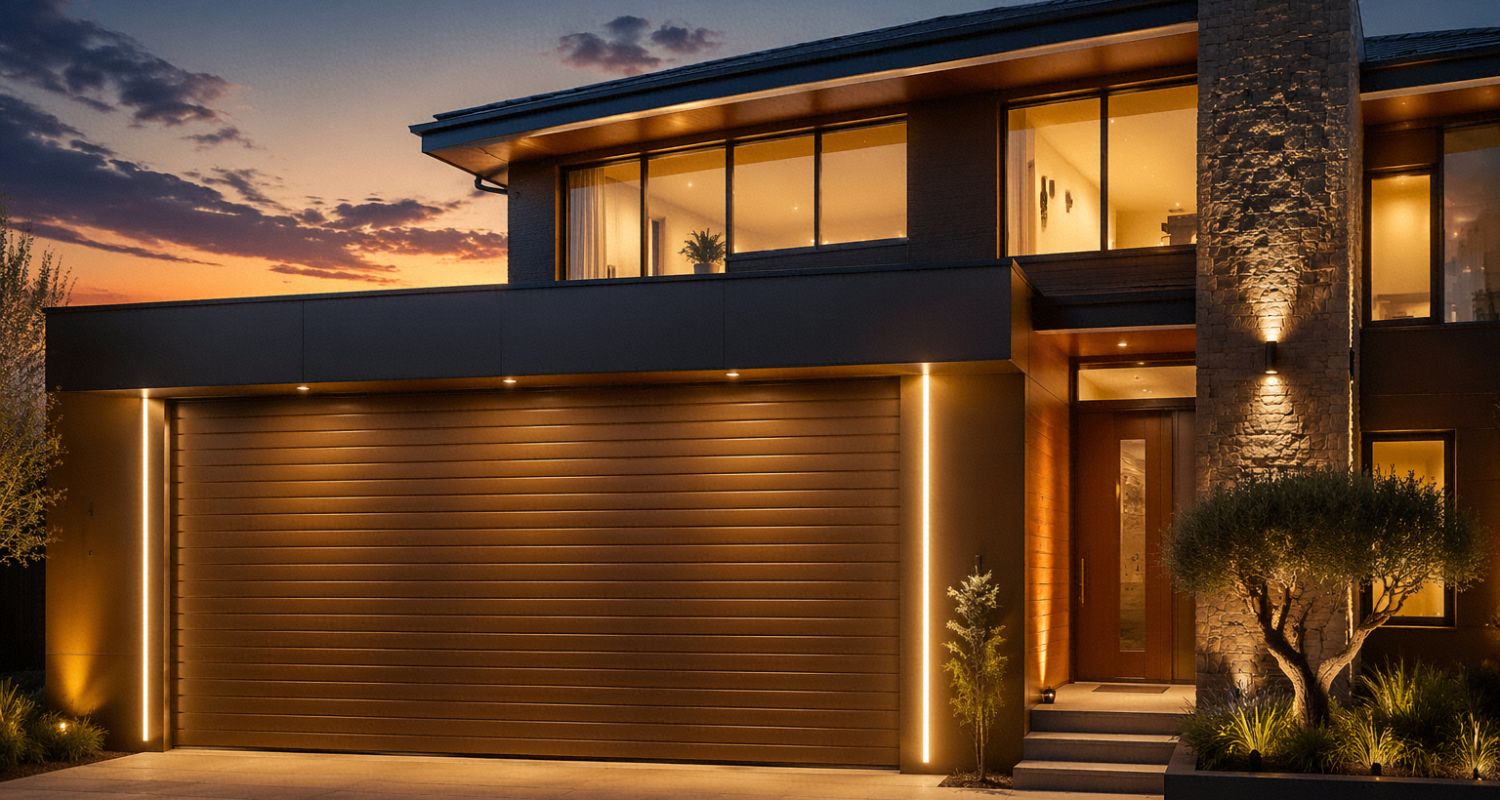
In residential warehouse conversions and industrial-style new builds, roller doors connect living spaces to courtyards and gardens, serve as striking garage features that match the architecture, and bring authentic industrial character to kitchens, studios, and entertaining areas. They let a home borrow the loft feeling even on a suburban block.
Hospitality and Retail
Cafes, bars, breweries, and restaurants use roller doors to open frontages to the street, creating the indoor-outdoor flow that drives atmosphere and trade. A brewery taproom in an industrial estate or a laneway cafe gains enormous energy from a frontage that opens completely. The door becomes part of the brand, signalling the relaxed, honest character these venues trade on.
Studios, Showrooms, and Workspaces
Creative studios, galleries, and design-led offices use roller doors to flood workspaces with light, divide flexible areas, and signal a certain unpretentious, maker-minded identity. In a showroom, an open roller door blurs the line between street and display in a way that pulls people in.
From the Project Files: A Tired Unit Reborn
To show how decisive the door can be, here is a project the Slide And Glide design team shared, with details changed at the client's request. A graphic studio took over a tired light-industrial unit in Osborne Park, all the right bones, high ceilings and concrete floors, but a dead, closed frontage of old infill panels that made the space feel like a storeroom.
The transformation came down largely to one move. The team replaced the blank frontage with a wide powder-coated roller door, charcoal grey, with a row of glazed panels set into the curtain so that light came through even when it was closed. Open, it connected the studio to a small forecourt where the team now eats lunch and photographs work. Closed, the glazed ribs throw a striking pattern of light across the concrete floor each afternoon. The owner says clients now comment on the space before the work. The design team's takeaway is one they see again and again: in a warehouse-style fit-out, the roller door is rarely just a door, it is the hero of the room.
Getting the Look Right
Pulling off the aesthetic well takes more than bolting on any roller door. The details decide whether it reads as deliberate or accidental. Profile matters, as the depth and spacing of the ribs change the character of the surface and the shadows it casts. Finish matters enormously, with the choice between raw galvanised, a moody powder-coat, or a bold colour setting the entire tone.
Glazing is a powerful option, since panels of glass set into the curtain let light through a closed door and add a refined, contemporary edge to the raw industrial form. And scale is everything, because the impact of a roller door grows with its size, so where the structure allows, going large pays off dramatically. These are design decisions worth making with intent, not defaults to accept from a catalogue.
Working With a Specialist Who Understands the Aesthetic
Because warehouse-style projects use roller doors as a design feature rather than just an access solution, it helps to work with a supplier who understands both sides. The door still has to perform, to seal, to resist the weather and the coast, and to operate reliably, but it also has to deliver a specific look. Balancing those demands is where experience counts.
A specialist in Industrial Roller Doors can advise on the profiles, finishes, glazing, and sizes that achieve the aesthetic you are after while still meeting the practical requirements of the space and the climate. Bringing that expertise in early lets you treat the door as the design feature it deserves to be, rather than discovering its constraints after the look is already locked in. The best results come from designing the door in, not bolting it on.
From Loading Dock to Living Room
It is worth remembering how recently this aesthetic was purely functional. The roller door earned its place on factories, workshops, and loading docks because it was tough, space-efficient, and cheap to run, with no thought given to how it looked. The shift came when artists and then designers began converting redundant industrial buildings and chose to keep these honest working elements rather than strip them out. What was once invisible infrastructure became a prized feature precisely because it was authentic.
That journey, from loading dock to living room, is why the roller door carries such weight in the look. It is not a decorative reference to industry, it is the genuine article, and people respond to that authenticity. Designing one into a new build is a way of borrowing that history and honesty, even where no factory ever stood.
Balancing Comfort With the Raw Look
The one tension in warehouse-style design is comfort. The raw materials that make these spaces beautiful, concrete, steel, glass, and a single-skin roller door, are not naturally warm or quiet, and a space can tip from characterful to cold and echoing if nothing is done. The trick is to keep the honest look while quietly solving the comfort problem.
For a roller door, that can mean choosing an insulated option where the budget and look allow, adding good perimeter sealing to stop draughts, and pairing the hard surfaces elsewhere with softer elements like rugs, planting, and timber. Done well, the space keeps its raw, open character while remaining genuinely liveable through a Perth summer and winter alike. The aim is a room that looks industrial and feels welcoming, not one that sacrifices one for the other.
.jpg)
Keeping the Look in Good Shape
A roller door used as a design feature still needs to work like a door, and a little care keeps it looking as good as the day it went in. The guides benefit from occasional cleaning and light lubrication, the curtain should run true, and any glazing set into the door wants the same attention as a window to stay crisp and clear. A door that binds, rattles, or streaks quickly undermines the polished industrial look you were chasing.
In coastal cities like Perth, add a freshwater rinse to wash off the salt that would otherwise dull a powder-coated or galvanised finish over time. This is doubly important for a door that opens to the street or a courtyard, where it is constantly exposed. A few minutes of maintenance now and then protects both the function and the aesthetic, so the door keeps performing as the hero of the space rather than slowly becoming its weak point.
The Bottom Line
The warehouse aesthetic endures because it values honesty, light, and material truth, and no single element embodies all three like the roller door. It is authentically industrial, it transforms a space by opening an entire wall to the outside, and its ribbed surface is a genuine piece of texture and shadow in its own right. That is why, from laneway cafes to loft homes to design studios, the roller door is so often the thing that makes the look land.
Treat it as a hero rather than a utility. Choose the profile, finish, glazing, and scale with intent, work with someone who understands both the look and the engineering, and the door will define your space in the best possible way. In warehouse-style design, the roller door is not the background. It is the point.


.svg)
.jpg)