How to Fit a Bathtub Into a Small Bathroom

.jpg)
When you're about to purchase a bathtub and before you get excited about any particular product, use your tape measure (please do!). This can save you lots of money further down the track. Measure the length and width of your floor, and the height to the ceiling. Account for how far the bathroom door swings and consider where your existing rough-in points are located.
Internal doorways leading to a bathroom are required to provide a minimum clear opening width of no less than 820 mm, and a minimum circulation space of 1200 mm by 900 mm must be maintained from the front edge of the toilet pan. Everything else about your bathtub's location has a little more flexibility once you know where these two elements need to sit. With your measurements, you can work out which bathtub styles will work for you.
Once you've mapped your fixed constraints, think about the *shape* of your remaining floor space — not just the total square metreage. A long, narrow bathroom? It'll often suit a straight alcove bath far better than a freestanding or drop-in style. Because the usable width outside the tub stays generous enough for a licensed plumber to work comfortably during installation. Worth considering carefully. And if your bathroom sits closer to square, you may genuinely find you have options that a purely rectangular room simply wouldn't allow you to explore at all.
Choose the Right Bathtub Style for a Small Bathroom
Not all bathtubs fit all floor plans. The main styles to consider in a small bathroom are alcove baths, corner bathtubs, and freestanding bathtubs. They slot into a three-wall recess, typically running 1500 mm to 1700 mm in length, and because three sides are enclosed, they leave the maximum remaining floor area open. Corner bathtubs make great use of the corner space of your bathroom, whereas freestanding bathtubs generally require at least 1800 mm of clear floor space around them.
Drop-in bathtubs follow a similar principle — they sit within a built surround or platform making them a genuinely budget-friendly path into bathtub ownership.
You have your potential bathtub styles. Now you work out exactly where you can place the bathtub in relation to the other fixtures in the room.
In practical terms, that placement decision almost always comes down to one thing — your plumbing rough-in. The existing drain and water supply locations will heavily influence which wall your bathtub can realistically sit against. So talk to a licensed plumber first. They'll tell you what's moveable and what simply isn't, because shifting drain points in a slab-on-ground home is a very different conversation to doing so in a raised timber-floor property. Worth knowing before you fall in love with a particular layout. Homes vary enormously in construction type, and that variation genuinely matters when you're making these decisions.
Plan the Layout to Maximise Space
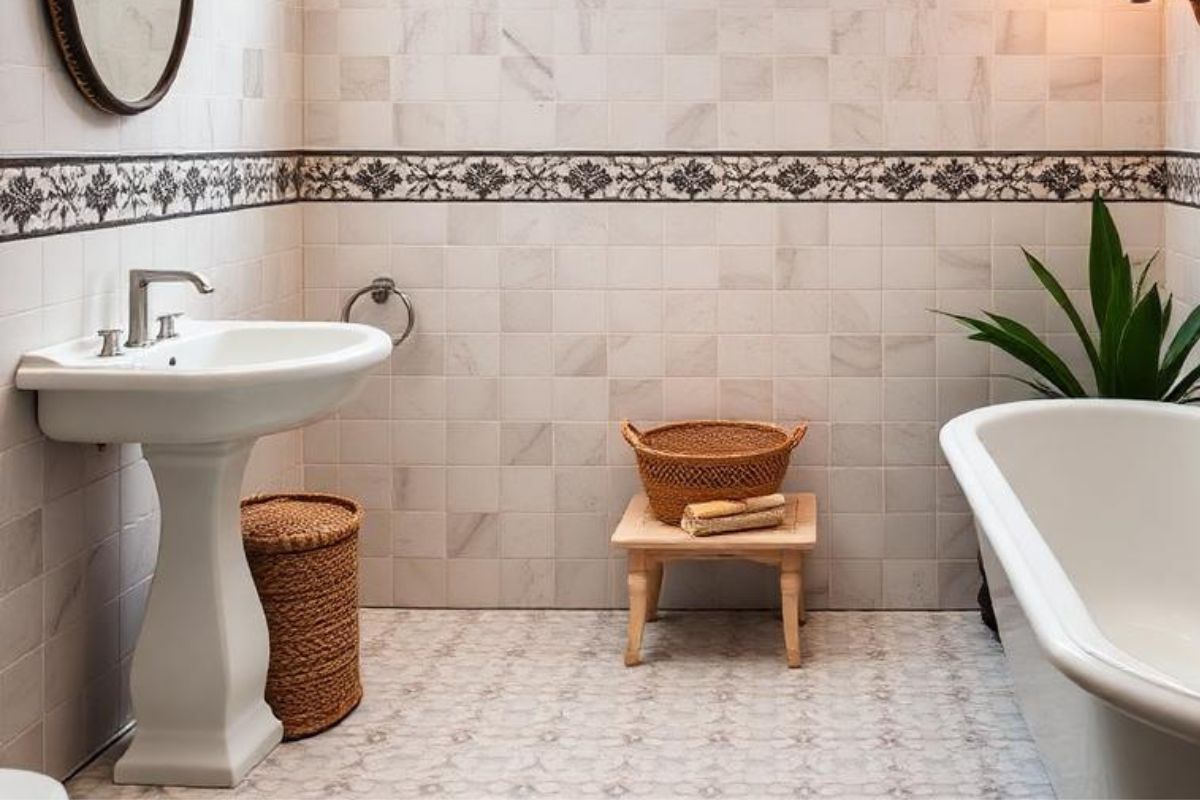
The bathtub fits in with the rest of your fixtures as you're working with the floor plan — and not just where the other fixtures are located, but the circulation space as well. Typical layouts in smaller bathrooms include the one-wall setup, an L-shape setup, and the wet-room setup. Draw up a scaled sketch of the bathroom floor plan — a quick hand-drawn version is perfectly fine, as long as it includes accurate measurements in millimetres. Doing so lets you see straight away if your preferred location for the tub provides adequate space to get in and out. Most planning errors occur when the location for the tub is fine on paper but the placement of the toilet or basin does not allow enough space to access them. Make a note of everything in the plan.
Once your plan is settled, you know the maximum dimensions you have to work with, and you can choose your material based on that and your available budget.
Acrylic and fibreglass? Genuinely solid choices for tighter footprints. Lighter materials, easier to manoeuvre during installation — which matters enormously when bathroom access is awkward or the hallway's doing its absolute best to make life difficult. Stone resin and cast iron are heavier. Both materials may well require a licensed plumber or builder to assess whether the floor structure can actually handle the load. Worth taking seriously in older homes, where the subfloor timber is often already working pretty hard.
Climate matters. Full stop. Living somewhere warm? A material that doesn't trap heat aggressively will suit your lifestyle far better than something sold purely on premium feel — no matter how impressive it looks under showroom lighting. That scaled sketch you've already drawn is your reference point for every single one of these decisions. Keep it close as you move into the selection stage. Simple as that.
Select the Best Bathtub Size
Standard bathtubs run between 1500 mm and 1800 mm in length. The most compact tubs are about 1200 mm long, but a more realistic length for soaking comfortably as an adult is at least 1500 mm. However, the actual tub length you'll get to soak in will not equal the outside measurement of the model, so you have to check both figures before you buy. If you want a space-saving tub that still offers a nice long soak, you might consider corner bathtubs, which take up otherwise awkward unused corners. There are four main material types of bathtubs available. Acrylic (which has a fibreglass backing) is a lightweight option, the most widely available of them, and is great if there are floor loading concerns. A fibreglass bathtub will weigh the least but isn't as durable in the long run. Stone resin bathtubs hold the heat very well and have a more high-end feel. However, they can weigh more than 100 kg, which may need to be factored into consideration about the weight-bearing capability of the bathroom floor. A cast iron bathtub is also very heavy and quite an expensive option. So if you are on a budget for your bathroom renovation, go for acrylic.
The second part to consider is how the bathtub is installed; this will make a big difference in how it performs and how long it will last.
Drop-in, freestanding, and alcove installations each carry their own structural and waterproofing demands — and in older homes, the existing plumbing rough-in position will often dictate which option is even realistic. Worth knowing early. An alcove installation leans on three surrounding walls for both support and waterproofing, so the condition of those walls matters enormously. Wet area waterproofing are strict and non-negotiable regardless of which installation type you choose. Which is exactly why a licensed plumber and a qualified waterproofer should both be across the project from the outset — not looped in halfway through when the decisions have already been made. So why leave those conversations until later?
.jpg)
Installation Considerations and Common Mistakes to Avoid
All bathtubs need to be connected to the water supply, waste, and overflow by a licensed plumber. Once the work is finished the plumber must give you a compliance certificate. It is not something to do yourself.
Waterproofing work also needs to be done in accordance with building codes. Walls adjacent to a bath must be water resistant to at least 150 mm above the vessel. If you're having a bathtub installed against walls, the waterproofing membranes need to be installed before the tub is installed — not after, and each membrane product must reach its 24-hour cure time before any water exposure. Wall and floor junctions must be flashed with a horizontal leg of at least 50 mm and a vertical leg of at least 25 mm above the finished floor level.
A few installation mistakes that cause the most problems and the most expensive ones? The waste pipes not being the right fall, not applying a waterproofing membrane correctly, and not thinking about the floor weight of a heavy tub, especially stone resin and cast iron. If a tub exceeds 100 kg when filled with water and occupied, a structural engineer assessment may be warranted before installation. Get the basics right and you'll love your bathtub for many more years to come.
Older homes are everywhere in suburbs. And they deserve a proper look before a new tub goes anywhere near them — specifically, the state of existing waste and supply lines. Because connecting a new fixture to compromised pipework doesn't fix the problem. It just moves it further down the line. A licensed plumber can assess whether ageing pipes are genuinely up to the job. Worth confirming your hot water system can adequately serve the bath, too. Particularly relevant in cooler climates, where heat loss through longer pipe runs is a real consideration. Not a theoretical one. An actual one.


.svg)
.jpg)