
Tiny Home vs Manufactured Home: Why More Buyers Are Choosing the Bigger Option

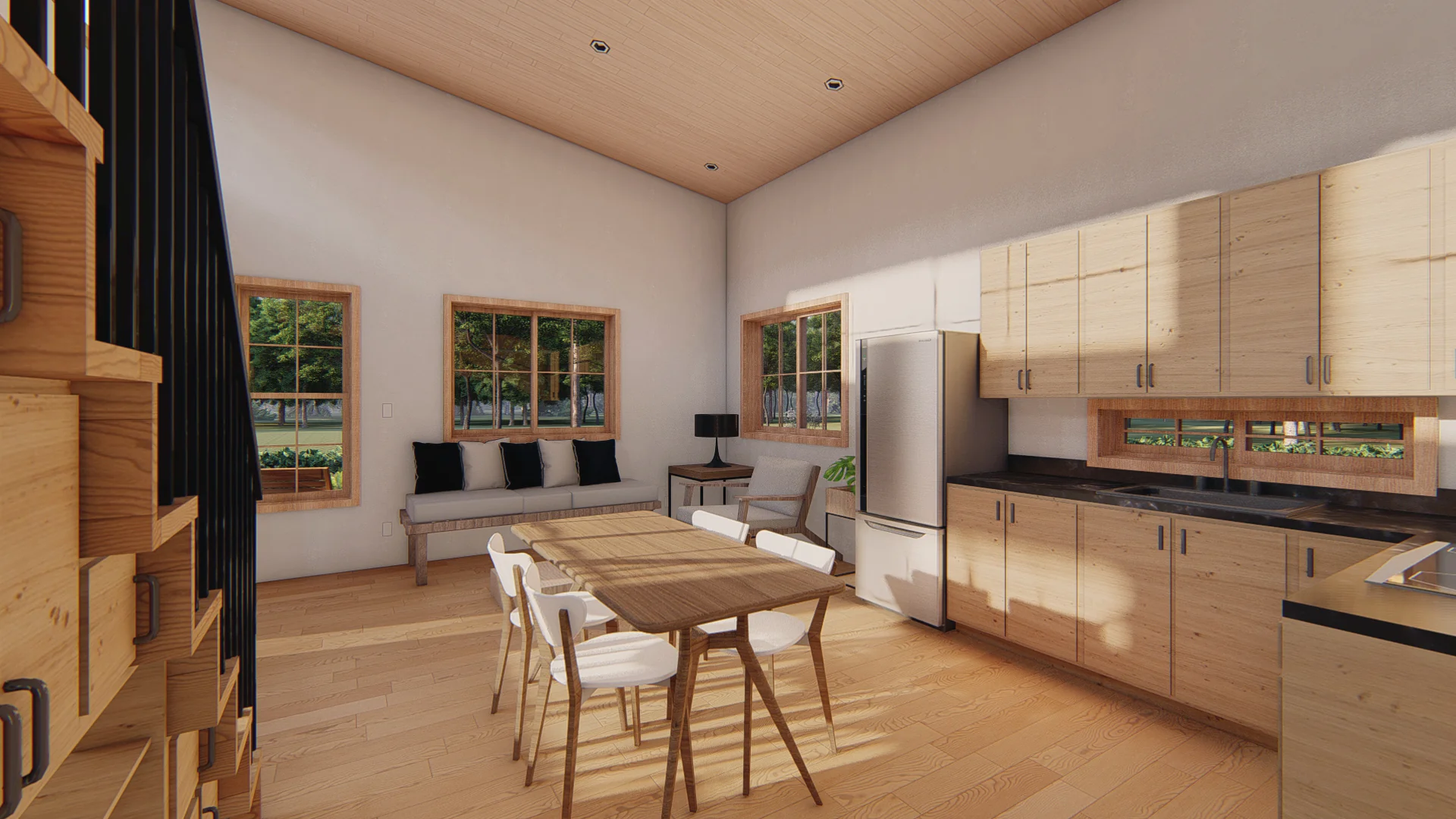
Tiny living has real appeal: less cleaning, fewer possessions, a smaller utility bill. Then you need a second bedroom, or a desk behind a door, and suddenly the numbers look different. At that point the real question isn't square footage. It's legal classification. If you're wondering what's the difference between site-built, modular, and manufactured homes, the answer matters more than any floor plan. It shapes how you finance the place and whether you can live in it year-round.
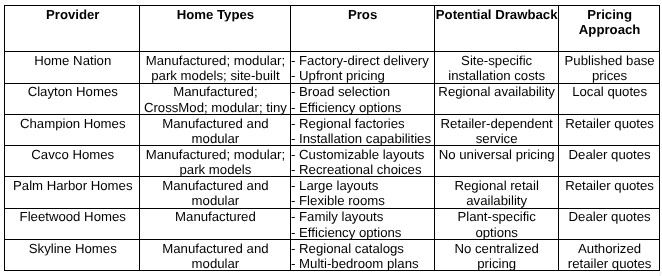
Dealers like Home Nation sell manufactured homes across Florida, Indiana, Ohio, Michigan, Illinois, Georgia, and Arizona. All seven providers below offer layouts bigger than the typical tiny house, but that's the easy part of the comparison. The hard part is financing and the rules around occupancy.
What's the Difference Between Site-Built, Modular, and Manufactured Homes?
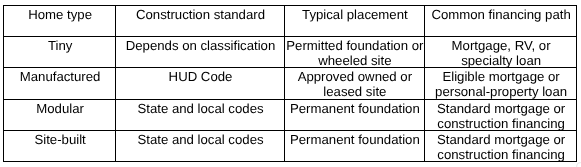
A site-built home is constructed largely on its own lot and governed by state and local codes. Modular homes meet those same codes, but the sections are built in a factory and then assembled on a permanent foundation. Manufactured homes are a different animal. Manufacturers build them to the federal Manufactured Home Construction and Safety Standards, the HUD Code effective June 15, 1976, on a permanent chassis, and each one carries certification labels.
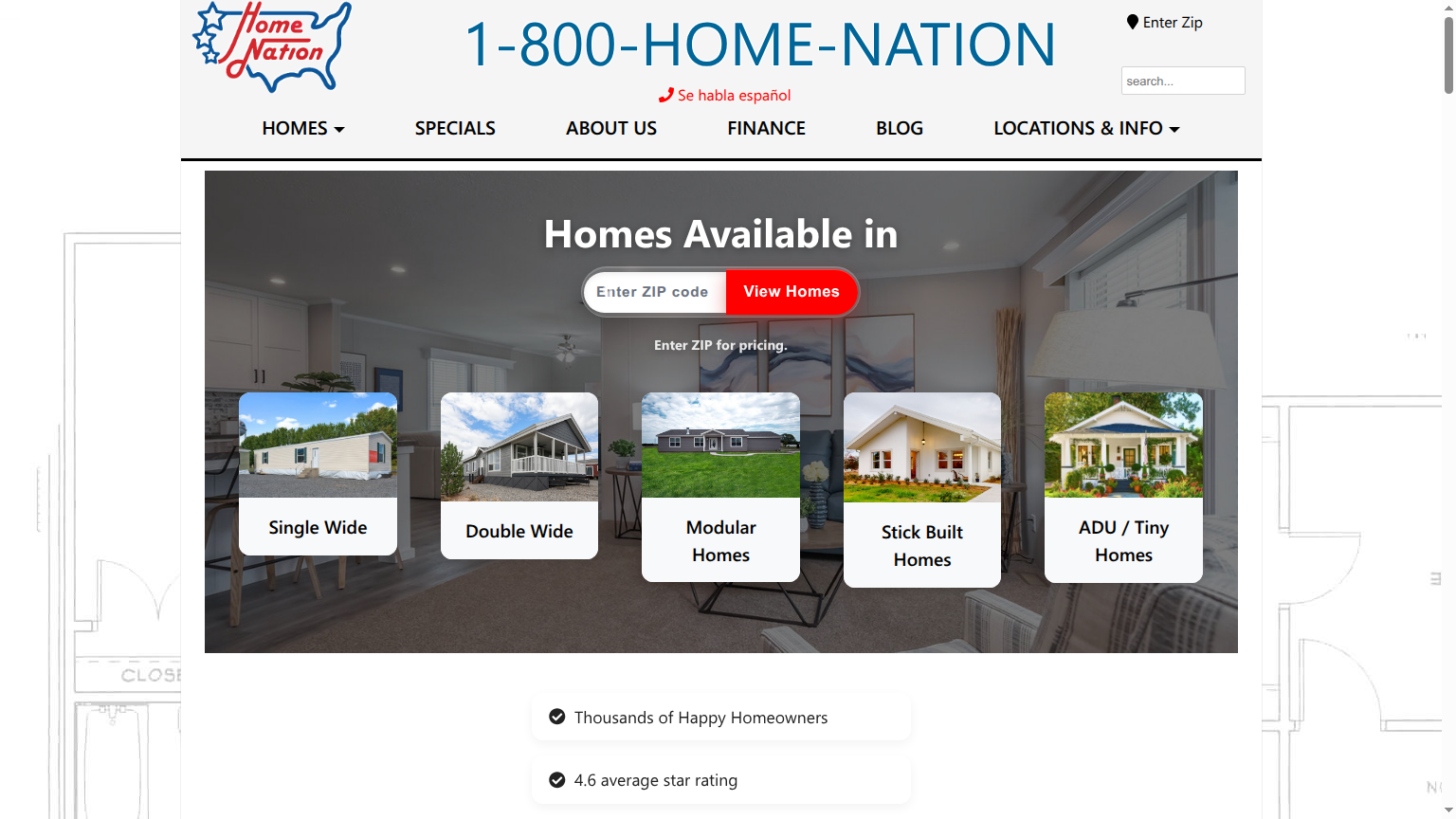
A desktop screenshot of the Home Nation homepage featuring its logo, navigation, ZIP-code home search, and cards for Single Wide, Double Wide, Modular, Stick. Image: Home Nation
Tiny isn't a construction category at all. It describes size, usually 400 square feet or less, and a tiny house may be legally classified as a dwelling or as an RV. Same house, very different occupancy rules.
Modular Home vs Manufactured Home: Which Is the Better Fit?
Neither type wins on every count. What's right for you comes down to your budget, your land, your lender, and the rules where you live. When people weigh modular against manufactured, modular construction tends to offer a standard mortgage path and flexibility under local codes, while manufactured housing is often the cheaper way to get more square footage.
Potential Downsides of Modular Homes
Modular homes come with their own headaches. Construction financing, site preparation costs, transport limits, and limited room for design changes once the factory starts production are all worth planning for. The site-built versus manufactured distinction matters here too: modular homes follow local building codes, just like site-built homes, while manufactured homes fall under the federal HUD Code.
Cost of a Modular Home Compared With a Mobile Home
On sticker price, a manufactured home usually beats a comparable modular one. Add in land, delivery, foundation, utility, and installation costs, though, and the gap can shrink considerably. One technical note: "mobile home" properly means a factory-built home made before the HUD Code took effect in 1976. Judge any listing by its condition and total installed cost, not the label on the listing.
How Long Can a Modular Home Last?
A well-built modular home can last as long as a comparable site-built home when its foundation, roof, exterior, and mechanical systems are maintained. How long it actually holds up has far more to do with construction quality, climate, upkeep, and repairs than with the fact that it arrived in sections from a factory.
Why Buyers Choose More Space
Never underestimate a door that closes. A second bedroom reshapes the daily rhythm of a household. A manufactured layout gives you separate sleeping areas plus full-size laundry appliances, and your dining table stops moonlighting as the only home office. A tiny home rewards minimalism but may not suit a growing family or a remote job.
Seven Manufactured-Home Providers to Compare
Look at models you can actually get for your ZIP code rather than nationwide starting prices. And get the totals in writing, delivery and site work included.
Home Nation
Home Nation sells new and used homes sourced straight from manufacturers, and the upfront prices already include delivery to your property. Type in your ZIP code for the delivered figure. Serving the lower 48 states, it's a practical starting point for browsing manufactured homes for sale in Florida, Indiana, Ohio, Michigan, Illinois, Georgia, or Arizona. One caution applies to any order: confirm the home's construction code, HUD versus modular, before you sign, because it drives both financing and permitting.

A red, white, and blue Home Nation logo featuring stylized lettering, three stars, and an outline of the continental United States on a transparent background. Image: Home Nation
Home Nation
Home Nation sells new and used homes sourced straight from manufacturers, and the upfront prices already include delivery to your property. Type in your ZIP code for the delivered figure. Serving the lower 48 states, it's a practical starting point for browsing manufactured homes for sale in Florida, Indiana, Ohio, Michigan, Illinois, Georgia, or Arizona.
One caution applies to any order: confirm the home's construction code, HUD versus modular, before you sign, because it drives both financing and permitting.
A red, white, and blue Home Nation logo featuring stylized lettering, three stars, and an outline of the continental United States on a transparent background. Image: Home Nation
What to know before buying:
- Best for: Buyers placing homes on their own land
- Setup support: Delivery and setup coordination
- Check before buying: Separate installation scope and site-work costs
Clayton Homes
Clayton's CrossMod homes are still HUD-code manufactured housing, just with permanent foundations and site-built-style touches like covered porches. They are not modular homes under local codes.
What to know before buying:
- Best for: Comparing compact and family layouts
- Compact manufactured example: TRU Buttercup, 408 square feet
- Options: E Built efficiency packages; availability varies
- Check before buying: CrossMod loan eligibility and site requirements
Champion Homes
Champion pairs regional manufacturing with its own transportation and installation capability. Even so, your retailer's contract determines who pours the foundation and who handles service calls.
What to know before buying:
- Best for: Regional production choices
- Example: Emerald Sky modular, 1,680 square feet
- Network: 46 manufacturing facilities
- Check before buying: Installer responsibilities and warranty contact
Cavco Homes
Cavco builds residential manufactured homes alongside recreational park models. A vacation unit is not automatically legal for full-time occupancy on your lot, so check the certification.
What to know before buying:
- Best for: Comparing residential and recreational units
- Distinctive offering: Anthem HUD-approved duplex series
- Options: Regional layout customization
- Check before buying: Certification and permitted occupancy
Palm Harbor Homes
Palm Harbor's Flex Space layouts adapt to offices or guests. You can order selected Keystone Horizon designs as either manufactured or modular, so your quote must name the construction type.
What to know before buying:
- Best for: Households needing flexible rooms
- Example: La Belle, four bedrooms and three bathrooms
- Example size: Approaching 2,900 square feet
- Check before buying: Serving factory and available configuration
Fleetwood Homes
Fleetwood is part of Cavco. Energy packages vary by producing plant, so don't assume every home carries the same certification.
What to know before buying:
- Best for: Conventional family layouts
- Example: Twin Peaks, 1,178 square feet
- Efficiency: ENERGY STAR options at Cavco-Nampa
- Check before buying: Insulation specifications and heating equipment
Skyline Homes
Skyline is a Champion Homes brand with regional catalogs. Start with the factory serving your area; a model advertised in California may not be available for your land in Florida.
What to know before buying:
- Best for: Regional multi-bedroom choices
- Representative sizes: Approximately 1,400 to 1,800 square feet
- Purchase support: Authorized retailers coordinate installation
- Check before buying: Roof-load specifications for your location
Financing and Placement: Where the Categories Split
Site-built and modular homes generally follow standard mortgage routes. Eligible manufactured homes have established programs too, but Fannie Mae requires qualifying homes to be titled as real property. Personal-property loans can cover the home without land. Tiny homes split the same way: a foundation-built tiny dwelling may qualify for a mortgage, while one on wheels may need RV or specialty financing.
Value and Zoning
Manufactured homes can face fewer zoning restrictions for full-time living than tiny homes on wheels classified as RVs. Some jurisdictions restrict wheeled tiny homes to RV settings. Where zoning permits manufactured residences but excludes residential RV use, a qualifying manufactured home has a year-round placement option that an RV-classified tiny home lacks.
The advantage is conditional: a foundation-built tiny dwelling may also qualify for residential placement. HUD certification does not guarantee zoning approval. Before paying a deposit, ask your planning office for written confirmation of permitted home types, year-round occupancy, and foundation requirements for your parcel.
Neither category guarantees appreciation. An owned lot and a financeable permanent installation can support manufactured-home resale; tiny homes on wheels may have fewer comparable sales to price against. Compare total ownership costs, including site rent where it applies.
Choose the Classification Before the Floor Plan
Pick the construction category your land and lender accept first, then choose the smallest layout that genuinely fits your household. For tiny-living design ideas, browse TinyHouse.com before you commit to a floor plan.


.svg)
.jpg)
.jpg)