Why Even a Tiny Home Needs Good Gutters

.jpg)
It is tempting to think a small roof means a small problem. The footprint is tiny, the eaves are short, so surely the rain takes care of itself. That assumption is exactly how tiny homes end up with rot, foundation issues, and water where it should never be.
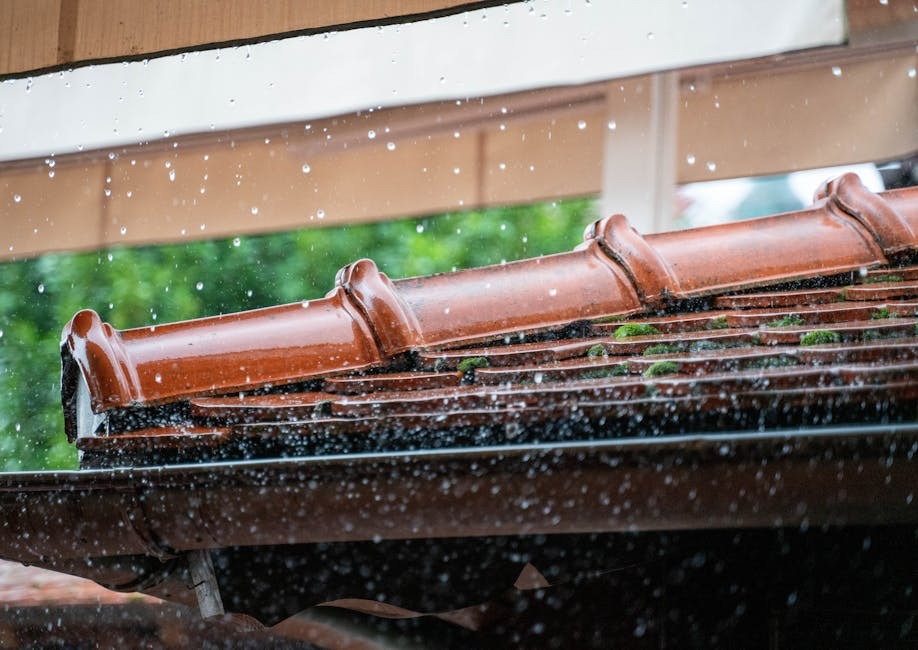
Good gutters fix the problem before it starts, and they cost very little to get right. An installer like Urban Seamless Gutters fits seamless systems sized to the building, whether it is a 2,000 square foot house or a 200 square foot tiny home. This guide explains why small dwellings still need gutters, what poor drainage does, and how to pick a setup that looks after itself.
Do Tiny Homes Really Need Gutters?
Yes, and arguably more than big ones. A tiny home sits closer to the ground, often on a trailer or a compact foundation, so roof runoff lands right where it can do harm.
Without gutters, every rainfall dumps water along the base of the walls. That splashes siding, soaks the area under the home, and finds any weak point in the build. On a small structure, there is far less margin before that water reaches something it can damage.
There is a wheels factor, too. Many tiny homes are built on trailers, where standing water and constant splashback accelerate rust and rot. Channeling that water away with a simple gutter run protects both the home and the chassis it rides on.
The smaller the home, the less it can absorb a drainage mistake. The fix is cheap. The damage is not.
What Happens Without Proper Drainage?
The damage is slow, then sudden. Water never announces itself, it just works away at the weakest seam until something gives.
The first casualties are usually the fascia and the area directly below the eaves. Repeated soaking warps trim, feeds mold, and stains siding. In a small build, those surfaces are a big share of the exterior. The damage shows fast.
Then there is the ground. Runoff pooling around the base erodes soil and undermines footings. On a trailer, it encourages rust underneath. Redirecting it is the whole job. The EPA suggests moving roof water well clear of the structure and, where it helps, capturing it in rain barrels.
None of this is dramatic at first. A little splash. A damp patch. A faint, musty smell. By the time it looks serious, the repair is real money.
Which Gutter Setup Suits a Small Home?
The right system is simple, light, and matched to the roof. A few choices cover almost every tiny home:
- Seamless aluminum. Light, rust-resistant, and cut to exact length on site.
- A single run plus one downspout. Often all a small roofline needs.
- Half-round or K-style profile. Pick for looks; both drain fine at this scale.
- A short extension at the base. Carries water a few feet clear of the home.
- Leaf guards if trees are near. Less climbing to clean a hard-to-reach roof.
Keep it proportionate. A tiny home rarely needs the capacity of a full house, just a clean, well-pitched run that moves water decisively. Over-building the system wastes money without adding protection.
How Do You Keep Tiny-Home Gutters Low-Maintenance?
By designing the upkeep out from the start. Less to clean means less reason to climb a ladder beside a small, sometimes mobile, structure. The table below sums up the levers.
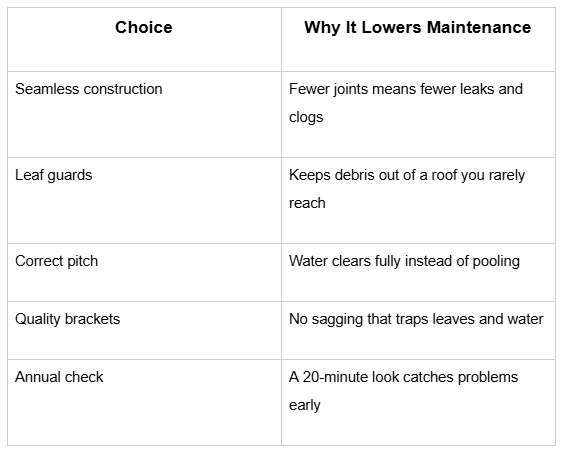
Moisture control is the long game for any small structure. The Department of Energy's advice on home weatherization ties directly to keeping water on the outside. Tiny-home regulations increasingly expect proper drainage. Getting the small details right is what separates a solid build from a leaky one.
How Often Should You Check the Gutters?
Twice a year is the simple rule, plus a quick look after any big storm. Spring and autumn cover the heaviest debris seasons. On a tiny home, the whole run takes only a few minutes to inspect.
Look for three things: sagging, standing water, and any joint starting to drip. Catch those early and a gutter system can run for 20 years with almost no trouble. Ignore them and a small clog becomes an overflow against the wall. The point of a low-maintenance setup is that this check stays quick and rare.
What to Remember for Your Build
- A small roof still sheds real water, often right against the walls.
- Tiny homes have less margin before water reaches something it can damage.
- Trailer-based homes especially need runoff steered away from the chassis.
- Seamless aluminum with one downspout suits most small rooflines.
- Design for low maintenance so you rarely have to climb up to clean.
Small Home, Smart Drainage
Gutters are one of the cheapest pieces of protection a tiny home can have, and one of the most overlooked. A light seamless run, pitched right and kept clear, steers water away from the walls, the foundation, and the trailer underneath. On a home where every surface counts, that quiet bit of plumbing is what keeps the whole build sound for years.
Frequently Asked Questions
Do Tiny Houses On Trailers Need Gutters?
Often yes, and they benefit even more than fixed homes. Roof runoff splashing back onto a trailer accelerates rust and rot on the chassis and underside. A simple gutter run with a downspout that directs water away protects the structure and the trailer it sits on.
What Type of Gutter Is Best for a Tiny Home?
Seamless aluminum is the usual winner. It is light, resists rust, and is cut to the exact length of a small roofline, so there are few joints to leak or clog. A single run with one downspout is enough for most tiny homes, keeping the system cheap and simple.
How Much Does It Cost to Add Gutters to a Tiny Home?
Far less than a full house, because there is so little roofline to cover. A typical small run might use just 20 to 30 feet of gutter, and the labor is often a single short visit. The exact figure depends on material and access, but a small seamless run is one of the more affordable upgrades you can make. Set against the cost of water damage, it pays for itself quickly, which is exactly why skipping it is a false economy.
Can I Collect Rainwater From Tiny-Home Gutters?
Yes, and many owners do it as a matter of routine. Directing the downspout into a rain barrel turns runoff into free water for plants or cleaning, where local rules allow. It is a tidy fit for the off-grid, low-waste mindset that draws many people to tiny living in the first place.


.svg)
.jpg)