Tiny House Roofing Installation Guide: Step-by-Step for DIYers

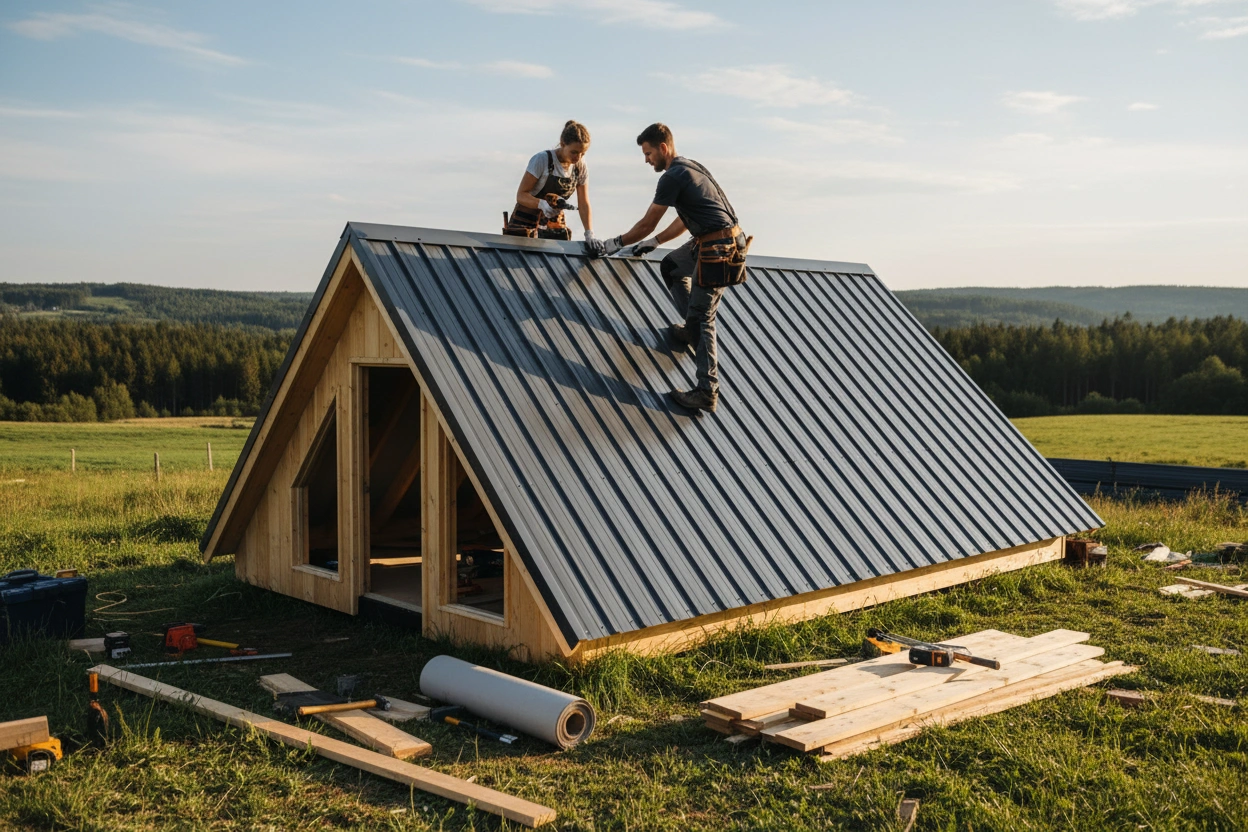
Building a tiny house is an exciting journey that blends creativity, practicality, and sustainability. Among the many decisions to be made, choosing the right roofing material and installing it correctly can significantly impact the longevity and efficiency of your tiny home. This guide provides a comprehensive overview of tiny house roofing installation, focusing on step-by-step instructions for DIY enthusiasts, as well as insights into the best roofing materials for tiny houses.
Understanding Tiny House Roofing
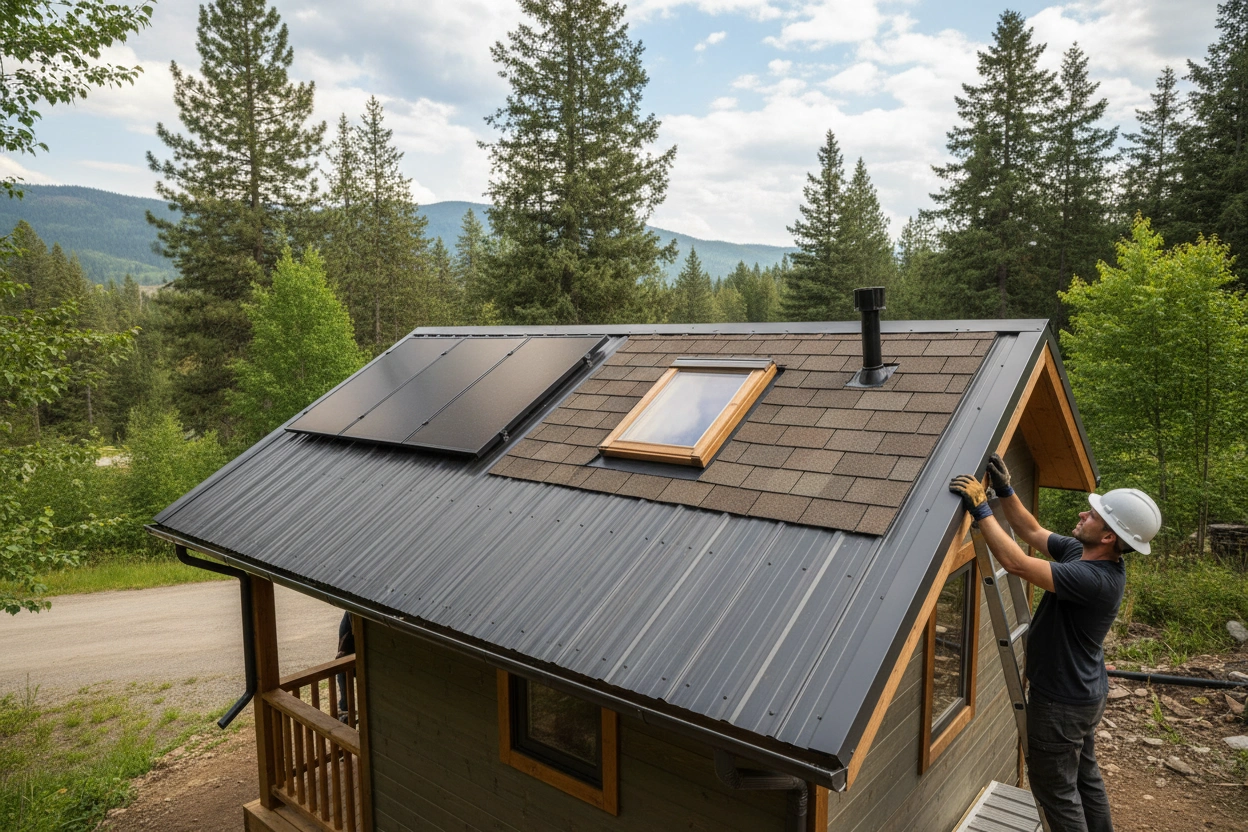
When considering tiny house roofing, it’s essential to recognize that the roof plays a crucial role beyond aesthetics. It protects against weather elements, contributes to insulation, and can even enhance energy efficiency. With a variety of roofing materials available, each with its own advantages and disadvantages, understanding these options can help you make an informed decision.
Importance of Choosing the Right Roofing Material
Selecting the right roofing material is critical for several reasons:
- Durability: The roof must withstand various weather conditions, including rain, snow, and wind.
- Weight: Tiny houses typically have weight restrictions; therefore, the roofing material should be lightweight yet strong.
- Cost: Budget constraints are common in tiny house projects, making it vital to consider both upfront costs and long-term maintenance expenses.
- Aesthetics: The roofing material contributes to the overall design of your tiny home, affecting both exterior appeal and resale value.
Top Roofing Materials for Tiny Houses: Pros and Cons
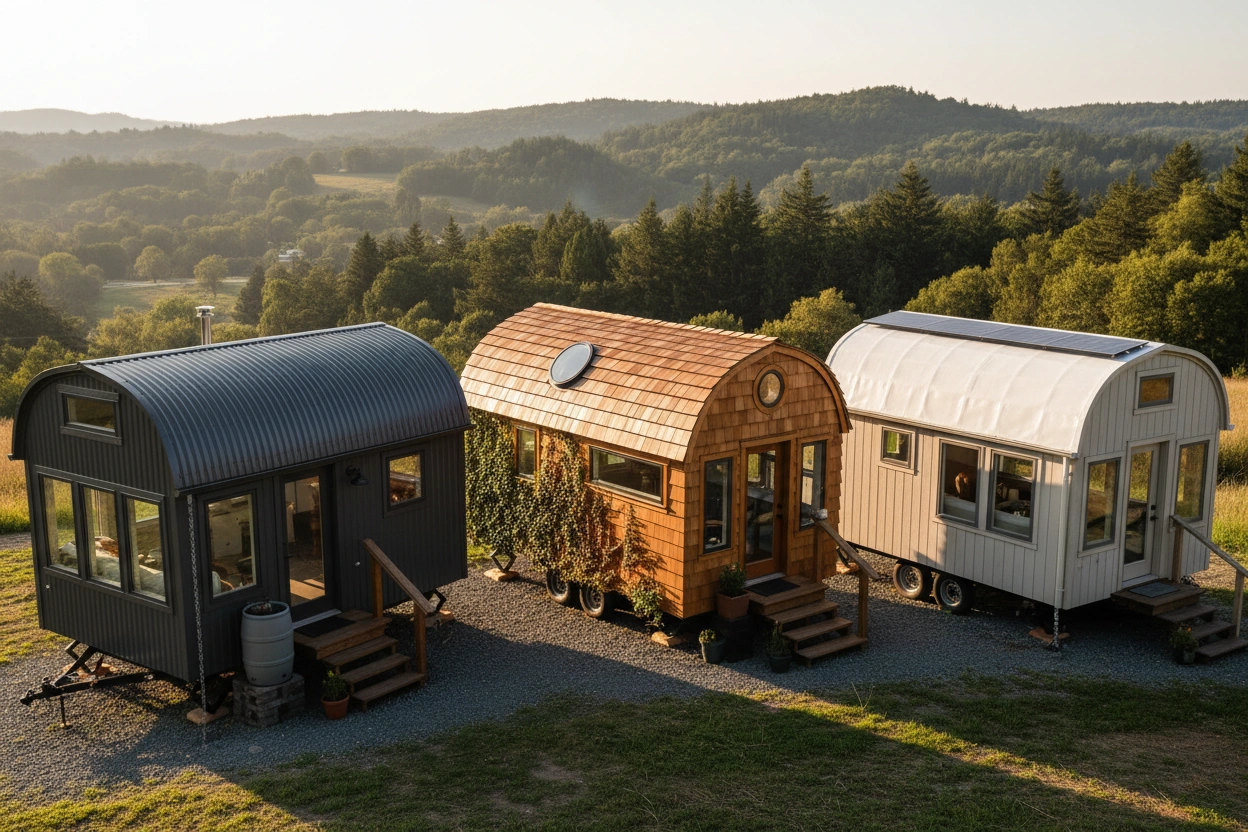
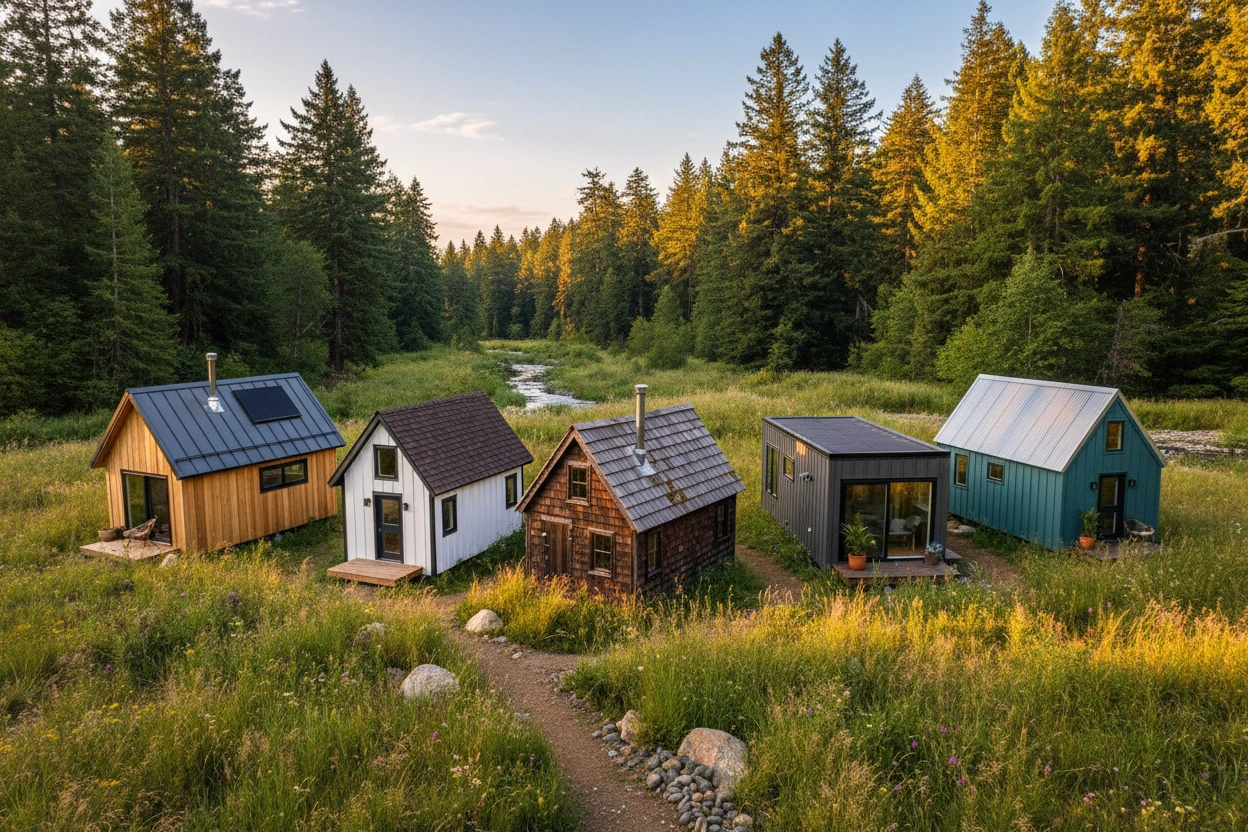
When it comes to tiny house roofing, there are several materials to choose from, each with its unique characteristics. Below is a list of the most common roofing materials used in tiny house construction, along with their advantages and disadvantages.
1. Metal Roofing
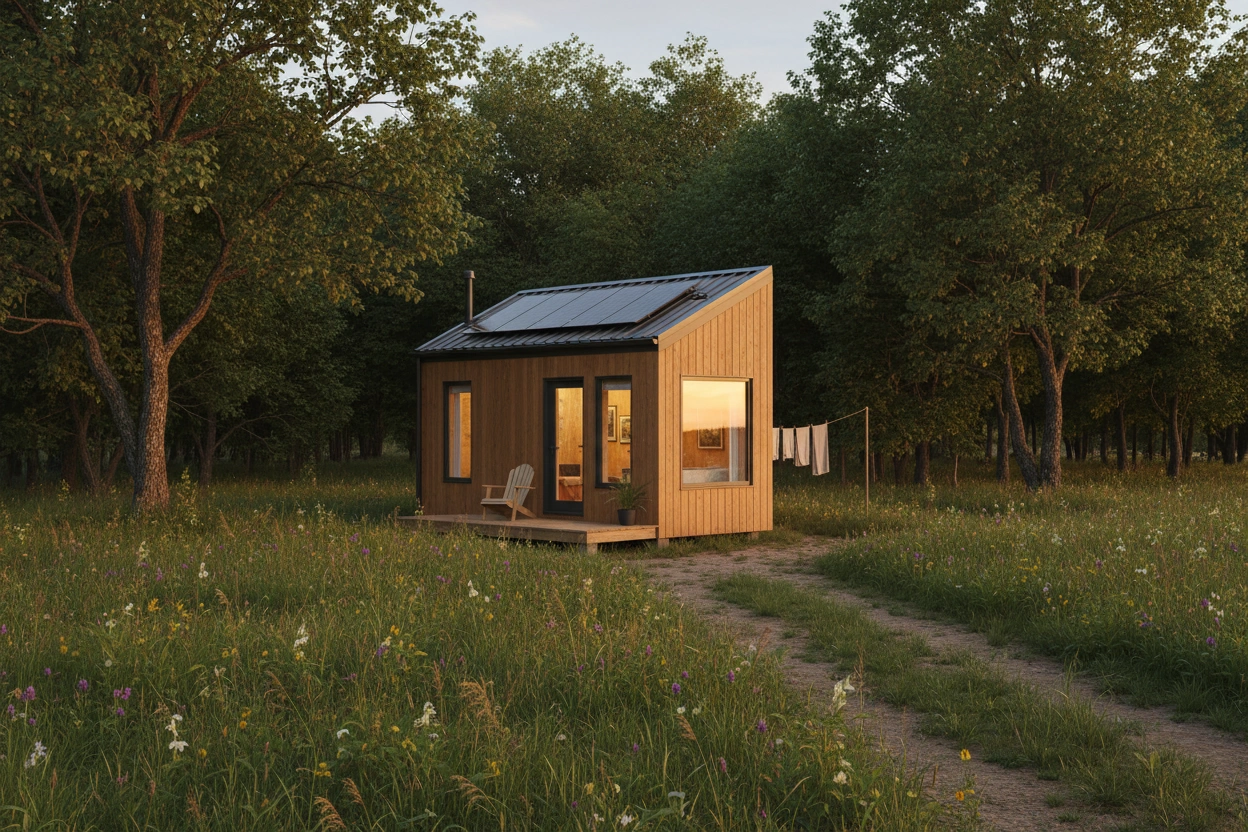
Metal roofing is a popular choice for tiny houses due to its durability and lightweight nature.
Pros:
- Long lifespan (up to 50 years)
- Resistant to extreme weather conditions
- Reflects sunlight, improving energy efficiency
- Low maintenance requirements
Cons:
- Higher initial cost compared to other materials
- Can be noisy during rain or hail
- Requires proper insulation to prevent condensation issues
2. Asphalt Shingles
Asphalt shingles are one of the most widely used roofing materials in residential construction.
Pros:
- Cost-effective and readily available
- Easy to install for DIYers
- Variety of colors and styles to choose from
Cons:
- Shorter lifespan (15-30 years)
- Vulnerable to wind damage
- Requires regular maintenance to prevent moss and algae growth
3. Wood Shingles and Shakes
Wood roofing provides a rustic look that many tiny house builders appreciate.
Pros:
- Natural aesthetic that blends well with the environment
- Good insulation properties
- Can last up to 30 years with proper maintenance
Cons:
- Higher maintenance requirements to prevent rot and insect damage
- Vulnerable to fire unless treated
- Typically more expensive than asphalt shingles
4. Slate Roofing
Slate roofing is known for its elegance and durability.
Pros:
- Extremely long-lasting (over 100 years)
- Fire-resistant and eco-friendly
- Adds significant value to the home
Cons:
- Very heavy, requiring a reinforced structure
- High cost and difficult installation
- Limited color options
5. Rubber Roofing
Rubber roofing is becoming increasingly popular for tiny homes due to its affordability and ease of installation.
Pros:
- Lightweight and flexible
- Resistant to UV rays and extreme weather
- Eco-friendly options available
Cons:
- Shorter lifespan compared to metal or slate (up to 30 years)
- Can be prone to damage from sharp objects
- May require additional insulation in colder climates
Step-by-Step Installation Guide for Tiny House Roofing
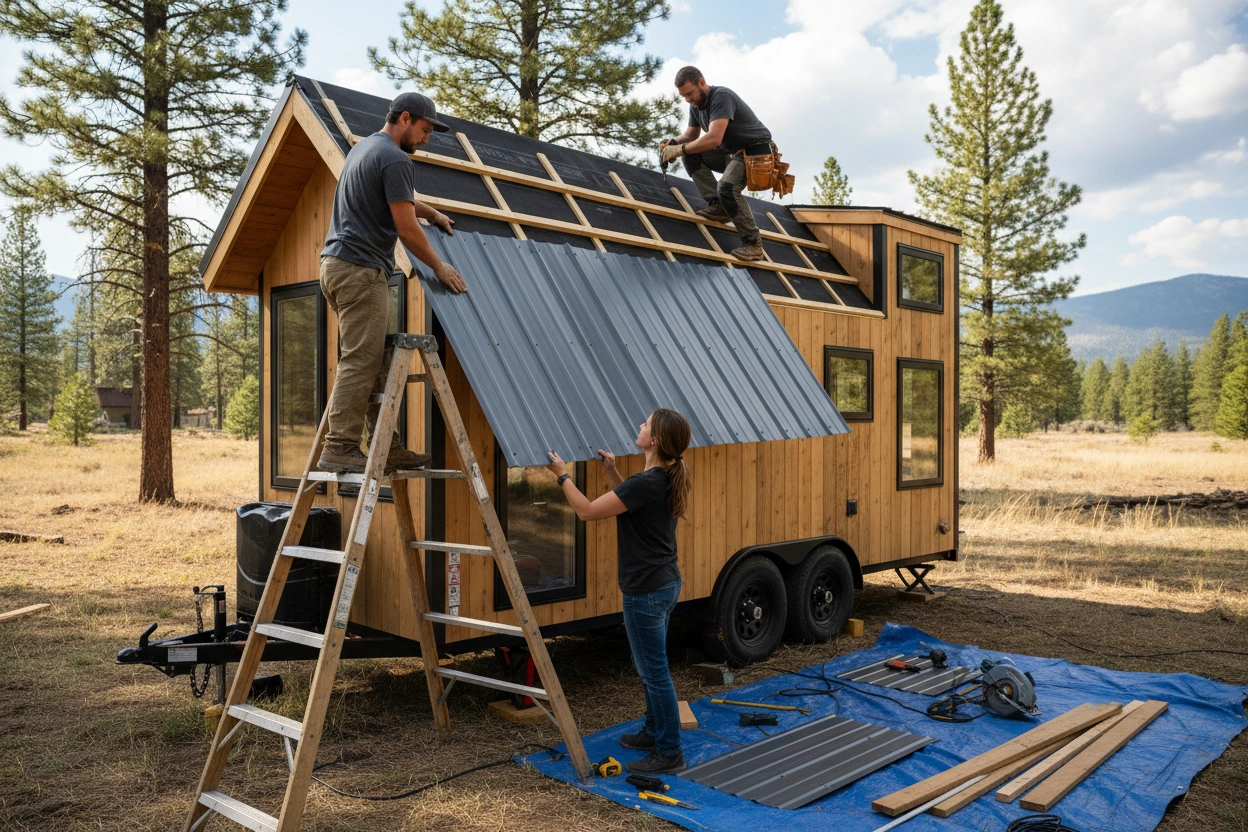
Installing a roof on your tiny house can be a rewarding experience, but it requires careful planning and execution. Here’s a systematic approach to ensure a successful installation.
Preparation Phase
- Choose Your Material: Based on the pros and cons discussed, select the roofing material that best fits your needs and budget.
- Gather Tools and Materials: Ensure you have all necessary tools, including:
- Measuring tape
- Hammer or nail gun
- Safety goggles
- Ladder
- Roofing nails
- Underlayment (if necessary)
- Check Local Regulations: Verify any zoning laws or building codes relevant to roofing in your area.
Installation Process
- Measure and Cut: Measure your roof’s dimensions accurately. Cut the roofing material according to the specifications of your chosen material.
- Install Underlayment: If your roofing material requires it, lay down the underlayment. This layer protects against moisture and should be installed from the bottom of the roof up, overlapping each row.
- Lay the Roofing Material: Start from the bottom edge of the roof and work your way up. Ensure that each piece overlaps the previous one to prevent leaks. Use roofing nails to secure the material in place.
- Install Flashing: Pay special attention to areas where the roof meets walls or chimneys. Install flashing to direct water away from these junctions.
- Finish with Ridge Caps: Once the main roofing is complete, install ridge caps along the peak to ensure a watertight seal.
Common Mistakes to Avoid
- Neglecting Proper Measurements: Always double-check your measurements before cutting materials.
- Ignoring Weather Conditions: Avoid installation during rainy or windy weather, which can compromise the quality of your work.
- Skipping Safety Gear: Always wear safety goggles and a harness when working on a roof to prevent accidents.
Conclusion: Your Tiny House Roofing Adventure Awaits
Installing a roof on your tiny house is a fundamental step in creating a safe and comfortable living space. By understanding the various roofing materials available and following a systematic installation process, you can successfully undertake this project as a DIY enthusiast. TinyHouse.com is here to support you on your tiny house journey. With a wealth of resources and expert insights, we can help you navigate the complexities of tiny house roofing and other construction projects. Whether you're looking for more information on roofing materials or need assistance with your build, visit TinyHouse.com to learn more and connect with our community.


.svg)